
Japandi design serves as a sophisticated bridge between the rustic elegance of Scandinavian functionality and the timeless minimalism found in Japanese aesthetics. This unique fusion creates a sanctuary that prioritizes tranquility through clean lines and organic textures. While many believe this style relies solely on muted neutrals, incorporating thoughtful color palettes can elevate the atmosphere into a vibrant yet restful retreat. By exploring these eight colorful inspirations, you will discover how to blend rich hues with natural materials like light oak and woven cane. Transform your personal sanctuary into a cohesive masterpiece that celebrates comfort, purposeful simplicity, and breathtaking harmony.
Terracotta Plaster and Low Slung Cedar
Embracing the warmth of the earth provides a grounded foundation for any Japandi bedroom. Imagine walls finished in a soft terracotta plaster that captures the changing light throughout the day. This rich backdrop pairs beautifully with low slung cedar bed frames and minimalist shelving. The architectural layout should emphasize open floor space to allow the warm colors to breathe. Incorporating textured linens in clay hues creates a layered sensory experience. By balancing these vibrant earthen tones with the raw grain of natural wood, the room achieves a sophisticated rusticity that feels both modern and deeply connected to the ancient world.
Forest Green Velvet and Light Oak

Integrating deep forest green introduces a sense of biophilic wonder into your sleeping quarters. This lush shade works best when applied to a single accent wall or through heavy velvet drapes that frame oversized windows. The dark green provides a stunning contrast against light oak joinery and pale tatami mats. Lighting should be soft and indirect, perhaps using paper lanterns that cast a warm glow against the verdant surfaces. This color choice evokes the feeling of a secluded woodland retreat while maintaining the strict geometric precision of Japanese design. It is a bold yet calming way to ground the space.
Muted Ochre Textiles and Bamboo Dividers

Muted ochre brings a cheerful yet sophisticated energy to the Japandi aesthetic without overwhelming the senses. Consider using this golden hue in hand woven throw blankets or accent pillows set against a neutral linen duvet. Architectural elements like bamboo room dividers can separate the sleeping area from a dressing nook, providing structural interest. The ochre serves to brighten the natural beige tones of the bamboo, creating a sundrenched atmosphere even on cloudy days. Focus on high quality natural fibers that showcase the depth of the pigment. This arrangement fosters a cozy environment that remains light and airily curated for relaxation.
Midnight Indigo Rugs and Shoji Screens
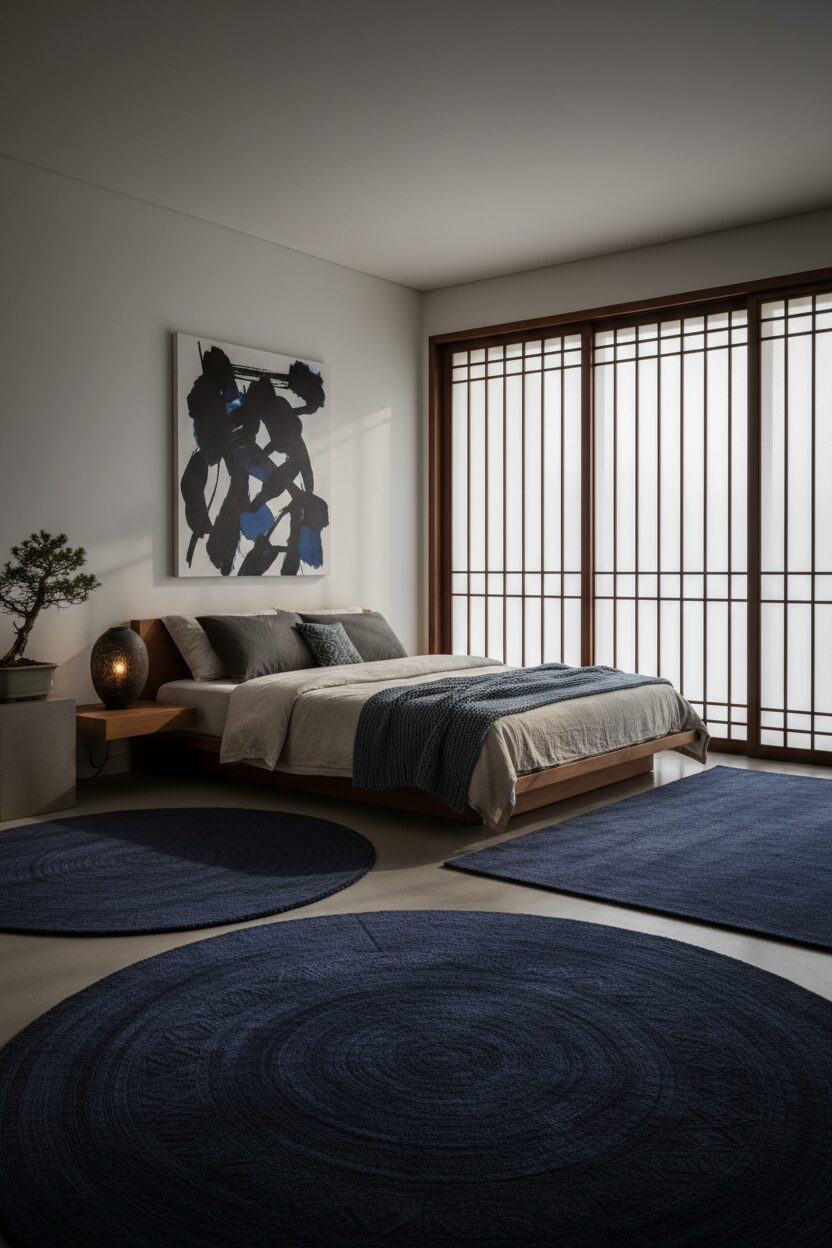
Indigo is a historic staple of Japanese design that adds dramatic depth to a modern bedroom. Apply this deep blue through a large area rug or a custom upholstered headboard. To prevent the room from feeling too dark, integrate traditional shoji screens that allow soft light to filter through translucent paper. The juxtaposition of the dark indigo with the bright white paper creates a striking visual balance. Use matte black metal light fixtures to bridge the gap between traditional craft and contemporary industrialism. This combination results in a serene nocturnal atmosphere that is perfect for deep and restorative sleep cycles.
Soft Sage Wash and Scandi Lightwood

Soft sage green offers a subtle departure from traditional greys while maintaining a neutral and calming presence. Applying a lime wash finish in this color adds a tactile stonelike texture to the walls. Complement this hue with Scandinavian lightwood furniture, such as a spindle back chair or a simple platform bed. The sage acts as a bridge between the indoor environment and the natural world outside. Spatial arrangement should prioritize a decluttered surface to let the soft color dominate the visual field. This palette encourages a slow paced lifestyle where every design choice feels intentional, fresh, and remarkably peaceful inhabitants.
Dusty Rose Mohair and Geometric Timber

Dusty rose provides a gentle warmth that softens the rigid lines often found in minimalist architecture. This color is most effective when used in textural elements like mohair rugs or heavy ceramic vases. Pair these soft pink tones with vertical geometric wood paneling on the walls to create a sense of height and structure. The interplay between the romantic hue and the architectural timber creates a balanced gender neutral appeal. Lighting should be warm toned to enhance the rosy glow of the surfaces. This approach transforms a sterile room into a plush sanctuary that feels inviting, curated, and exceptionally cozy.
Slate Blue Hues and Concrete Textures

Slate blue introduces a cool architectural edge to the bedroom while remaining soft enough for a cozy atmosphere. This color works exceptionally well when paired with polished concrete floors or cement effect wall finishes. The coolness of the blue is tempered by the addition of warm wool textiles and plush bedding. Keep the spatial arrangement focused on symmetry to honor the Japanese influence of order and precision. Use recessed LED strips to highlight the junction between the blue surfaces and the grey concrete. The resulting aesthetic is a sophisticated urban interpretation of Japandi style that feels quiet, strong, and timeless.
Burnt Orange Accents and Walnut Frameworks

Burnt orange serves as a vibrant focal point that adds a touch of mid century flair to the Japandi palette. Use this bold color sparingly in artwork or a single statement armchair. To ground this energetic shade, utilize dark walnut for the bed frame and nightstands. The deep chocolate tones of the walnut provide a mature contrast to the bright orange, creating a rich and layered look. Ensure that the lighting is adjustable to shift the mood from energetic to intimate as evening approaches. This final touch of color ensures the bedroom feels personalized, spirited, and perfectly harmoniously designed always.
Leave a Reply