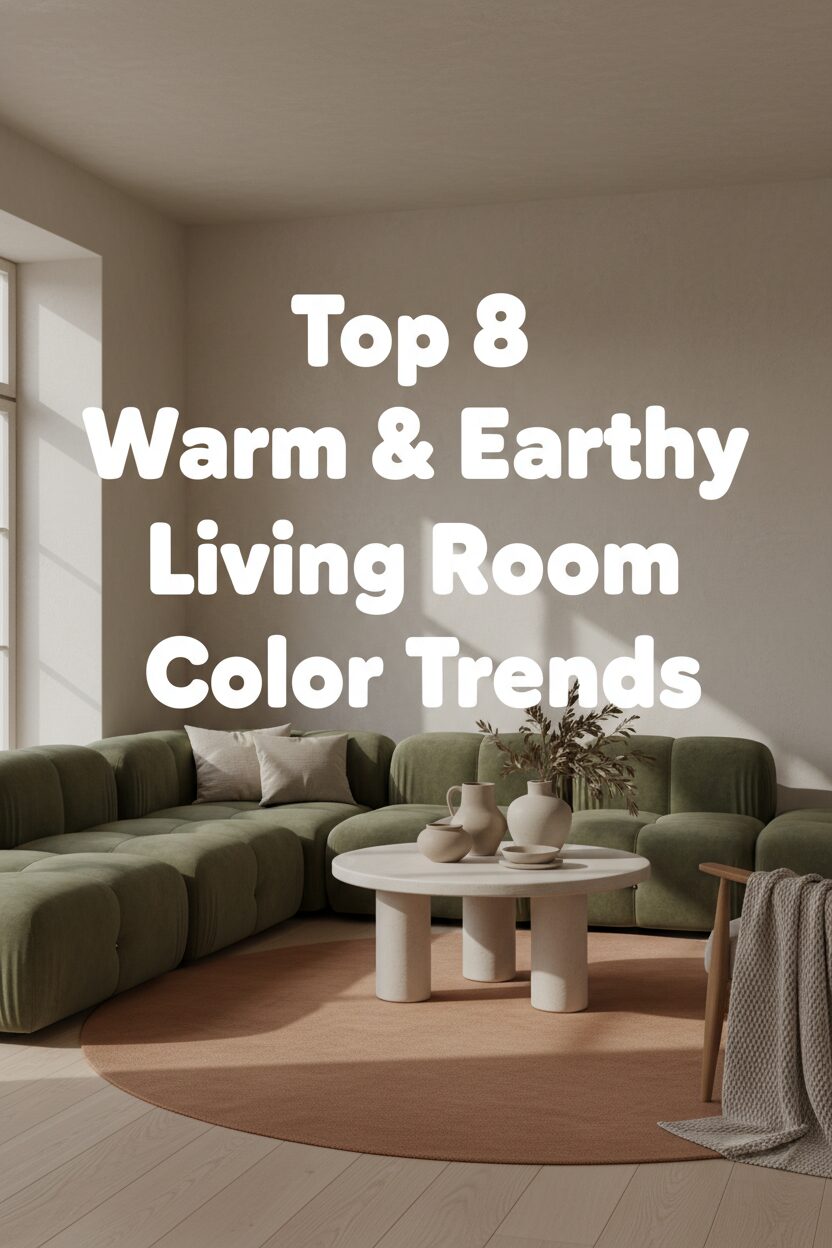
Scandinavian design has long favored a monochromatic palette of stark whites and cool grays yet a contemporary shift introduces warm earthy tones to create a more inviting sanctuary. This evolution focuses on the delicate balance between functional minimalism and soulful organic comfort within the modern living room. By integrating soft terracotta, muted ochre, and deep forest greens, homeowners can cultivate an atmosphere that feels both expansive and grounded. These sophisticated hues enhance the natural light characteristic of Nordic interiors while fostering a sense of wellness and serenity. Embracing this palette transforms a simple living space into a refined textural masterpiece.
Muted Terracotta Accents
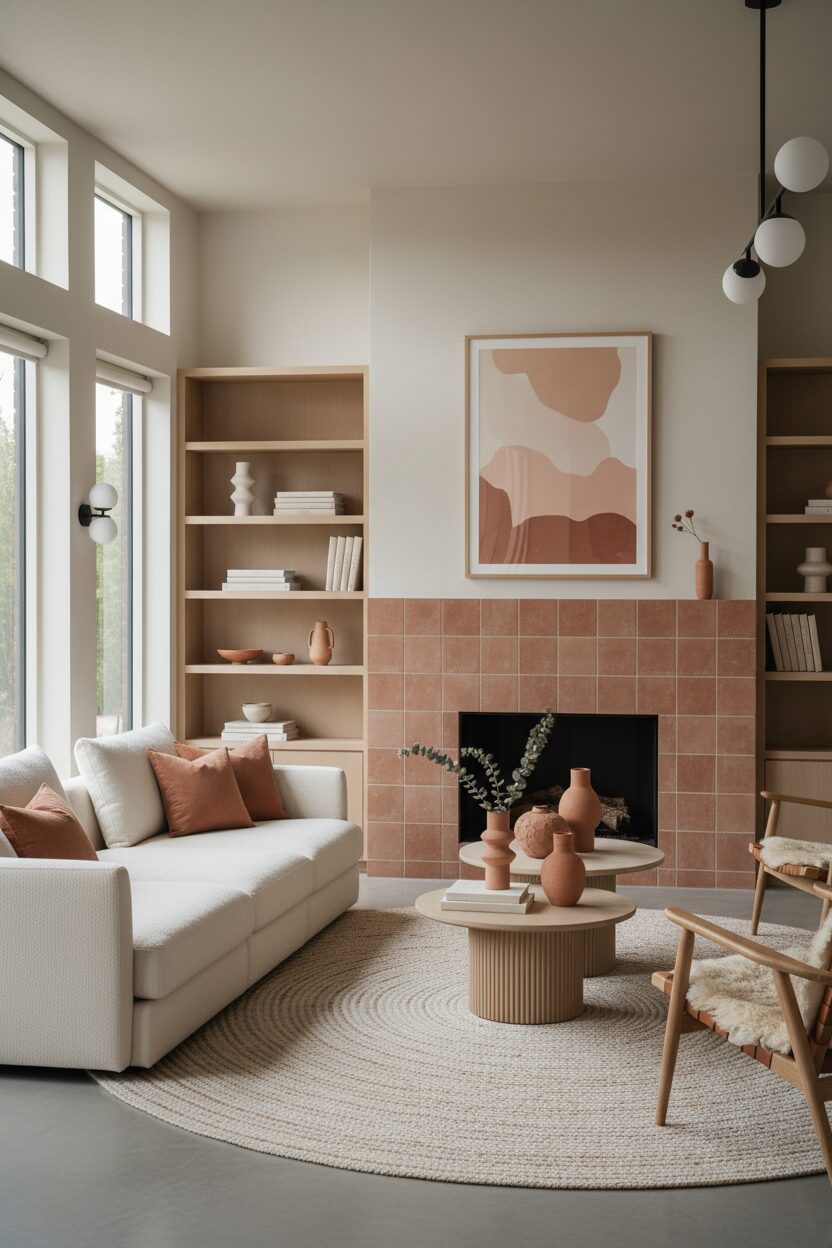
Integrating muted terracotta into a Scandinavian living room adds a layer of sun baked warmth that perfectly complements pale ash wood floors. This earthy hue functions as a sophisticated bridge between traditional rustic aesthetics and modern urban minimalism. When applied to a feature wall or large scale ceramic vessels the color creates a subtle focal point that does not overwhelm the inherent airy quality of the room. Designers often pair this clay inspired tone with soft cream upholstery to emphasize a tactile connection to nature. The result is a space that feels deeply rooted in the landscape while maintaining balance.
Golden Ochre and Natural Light
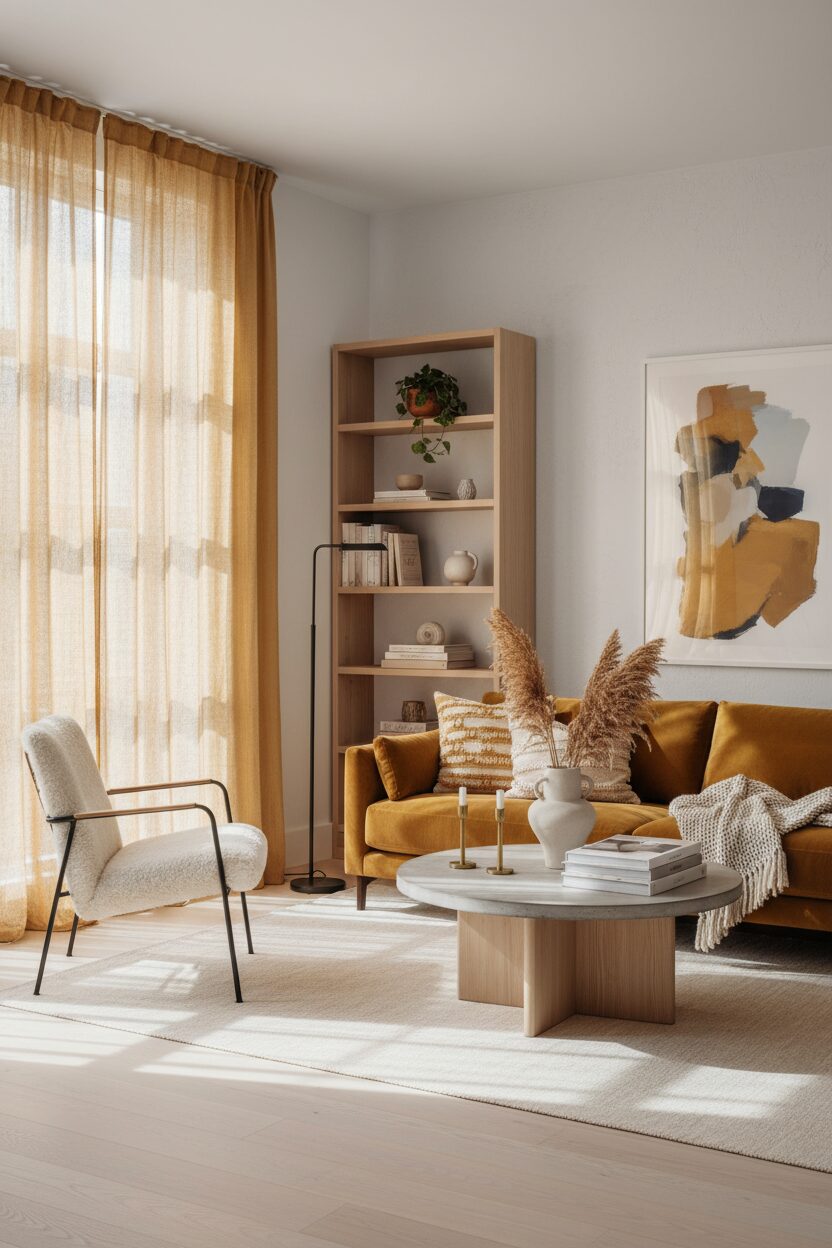
Golden ochre serves as a luminous addition to the Nordic home by capturing and diffusing natural light during the shorter winter days. This rich harvest inspired shade works exceptionally well on soft furnishings like velvet cushions or heavy linen curtains. It provides a necessary pop of color that remains grounded in the natural world rather than feeling artificial or overly saturated. When positioned near floor to ceiling windows the pigment glows with an organic intensity that breathes life into the architectural lines. This strategic use of color ensures that the living room remains vibrant and energetic throughout every seasonal cycle.
Deep Sage for Biophilic Harmony
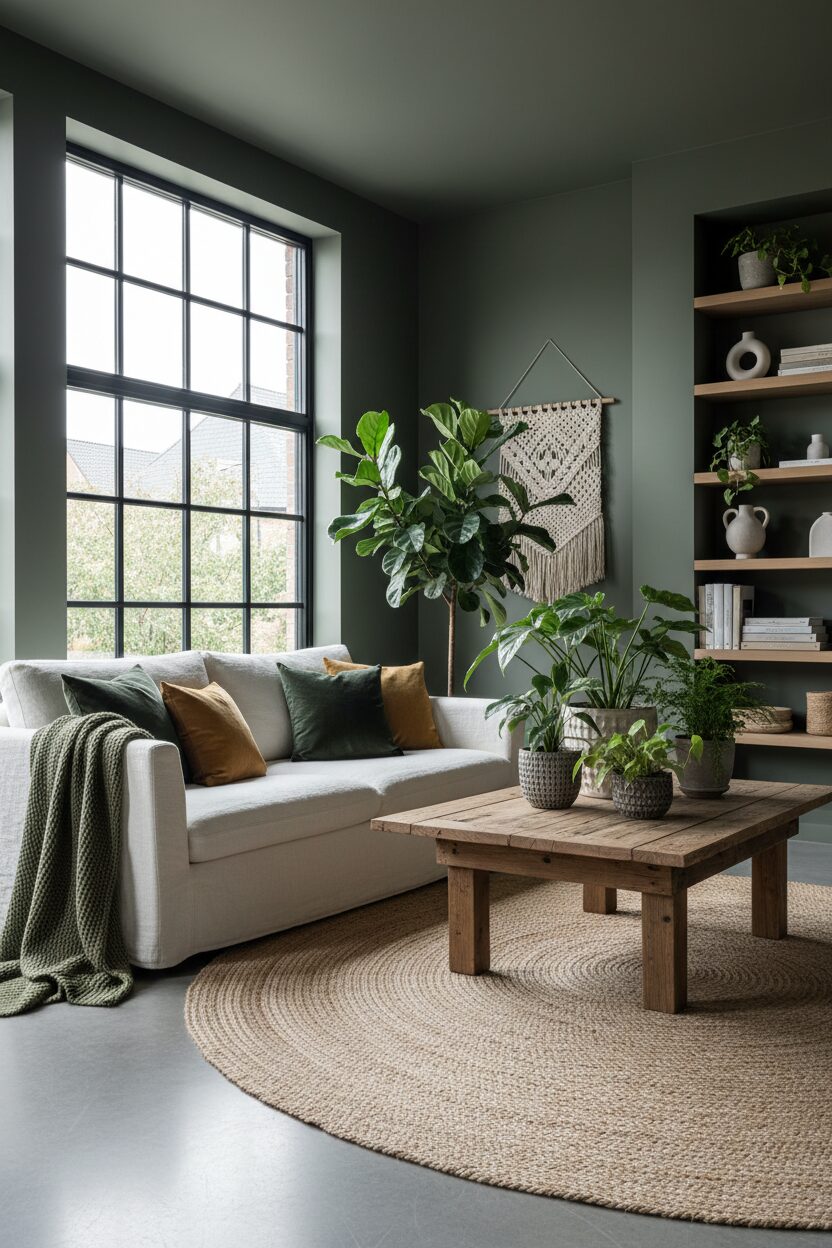
Deep sage green acts as a silent anchor in a Scandinavian inspired living area by establishing a direct visual link with the surrounding forest environment. This color is most effective when utilized on matte finished cabinetry or as the primary hue for a low profile sofa. The muted green tone softens the starkness of white walls and creates a sense of tranquil enclosure without sacrificing the feeling of open space. Pairing sage with light oak furniture and woven jute rugs enhances the biophilic connection further. This thoughtful color choice encourages relaxation and mindfulness by bringing the calming essence of nature.
Warm Sand and Textural Depth
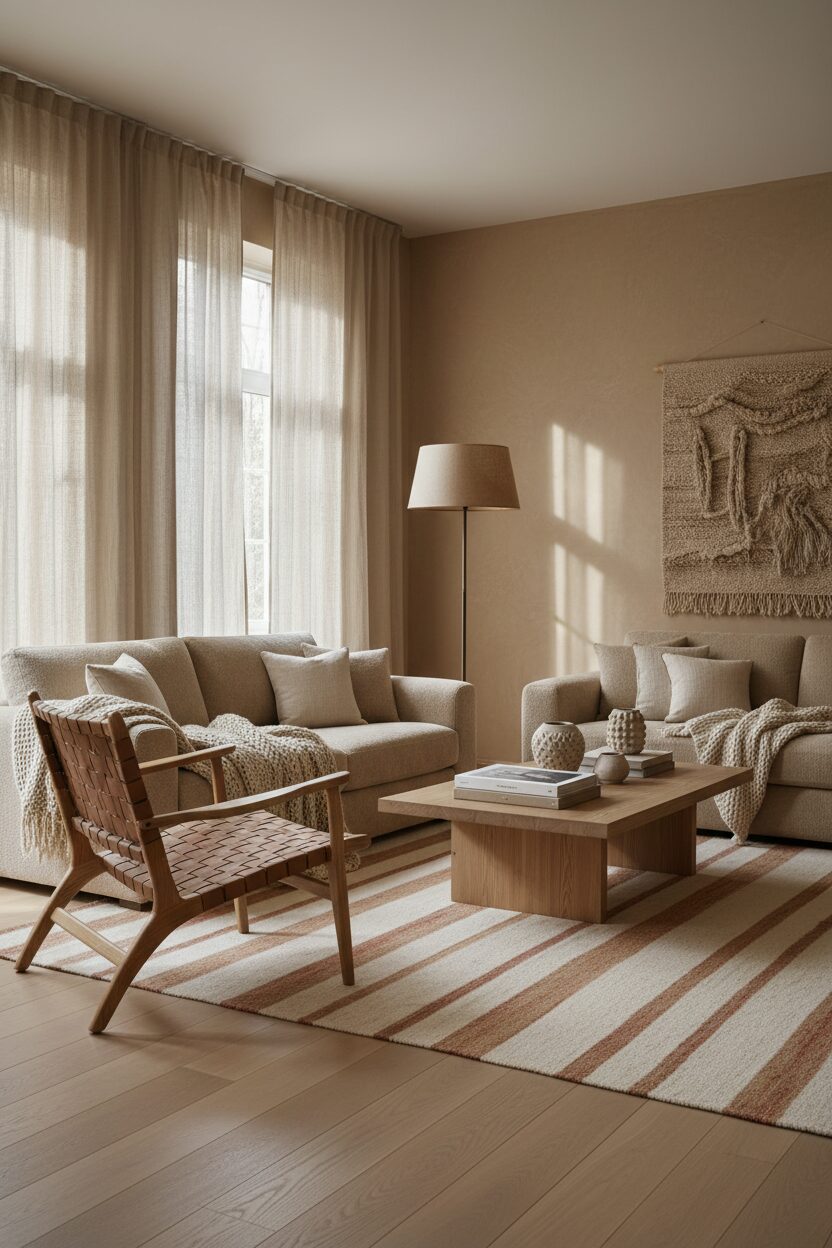
Warm sand is the quintessential neutral that replaces traditional stark white to provide a softer and more nuanced backdrop for living room activities. This versatile color creates a monolithic look when applied to both walls and built in shelving units. The warmth of the sandy tone reacts beautifully with ambient lighting from sculptural pendant lamps casting a soft glow that eliminates harsh shadows. By layering different textures in the same sandy palette such as boucle wool and smooth plaster designers achieve a sophisticated multidimensional effect. This approach results in a serene environment that feels incredibly cozy and meticulously curated today.
Burnt Umber and Structural Contrast
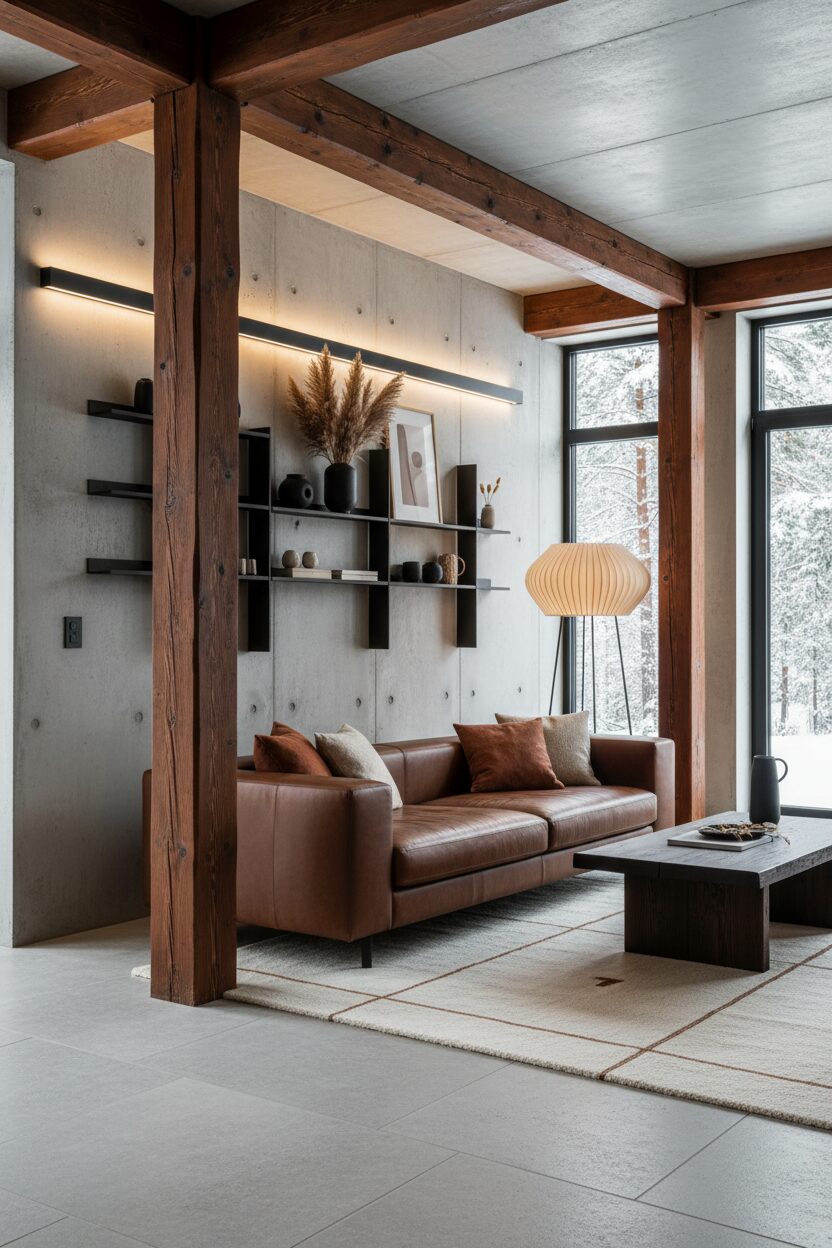
Burnt umber provides a necessary weight to the often ethereal Scandinavian design language by introducing a sense of permanence and architectural definition. This dark coffee like brown is ideal for structural elements such as exposed wooden beams or metal framed coffee tables. It creates a striking contrast against pale gray walls and prevents the room from appearing too floaty or ungrounded. When used sparingly but purposefully burnt umber draws the eye to specific design details and highlights the craftsmanship of the furniture. This grounding color choice fosters a feeling of security and domestic stability within the modern minimalist living space.
Soft Clay for Subtle Sophistication
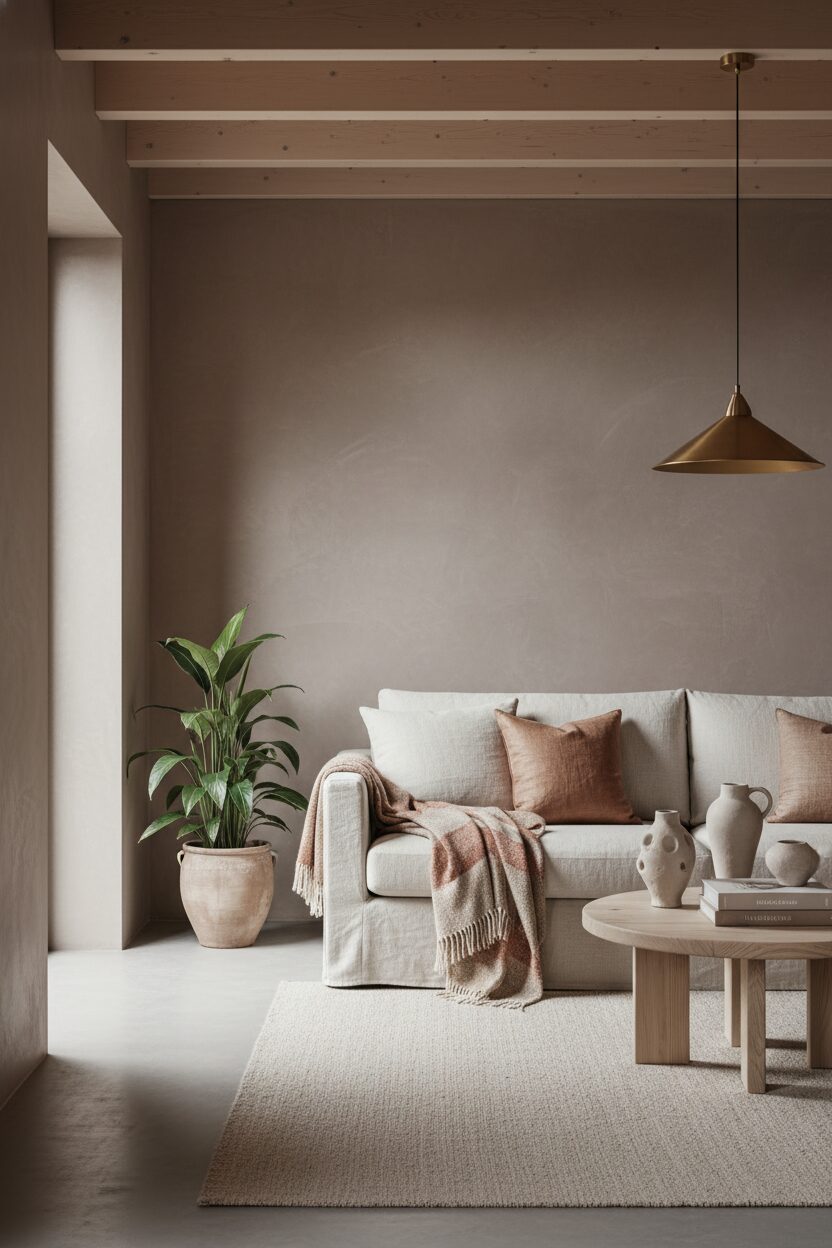
Soft clay is a delicate hybrid of pink and beige that introduces a gentle blush to the Scandinavian palette without appearing overtly feminine. This sophisticated tone works beautifully on textured wallpaper or as a lacquer finish on floating media consoles. It adds a layer of complexity to the room color story by shifting slightly under different lighting conditions. Designers frequently use soft clay to create a seamless transition between various living zones within an open plan layout. The color promotes a soothing atmosphere and pairs elegantly with brushed brass hardware or smoked glass accents to create a truly contemporary look.
Dusty Olive for Muted Elegance
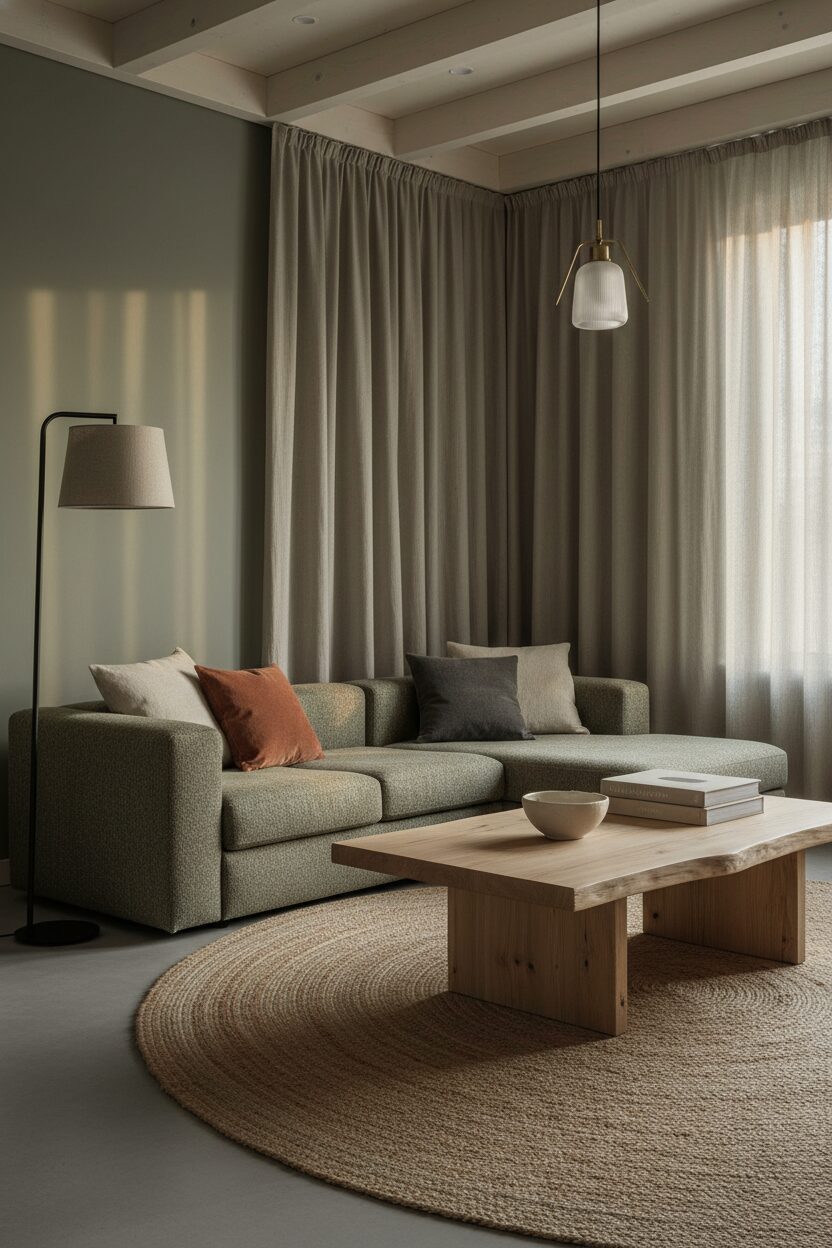
Dusty olive offers a refined alternative to brighter greens and fits perfectly within the earthy Scandinavian aesthetic by providing a sense of historical gravitas. This muted shade is particularly effective in spaces with high ceilings and ample architectural molding as it emphasizes the structural proportions. When combined with leather armchairs and dark walnut accents dusty olive creates a library like ambiance that is both studious and relaxing. The color has a unique ability to absorb excess light making it an excellent choice for a cozy media corner. This sophisticated hue ensures the living room feels timeless and exceptionally well composed.
Charcoal Gray with Warm Undertones
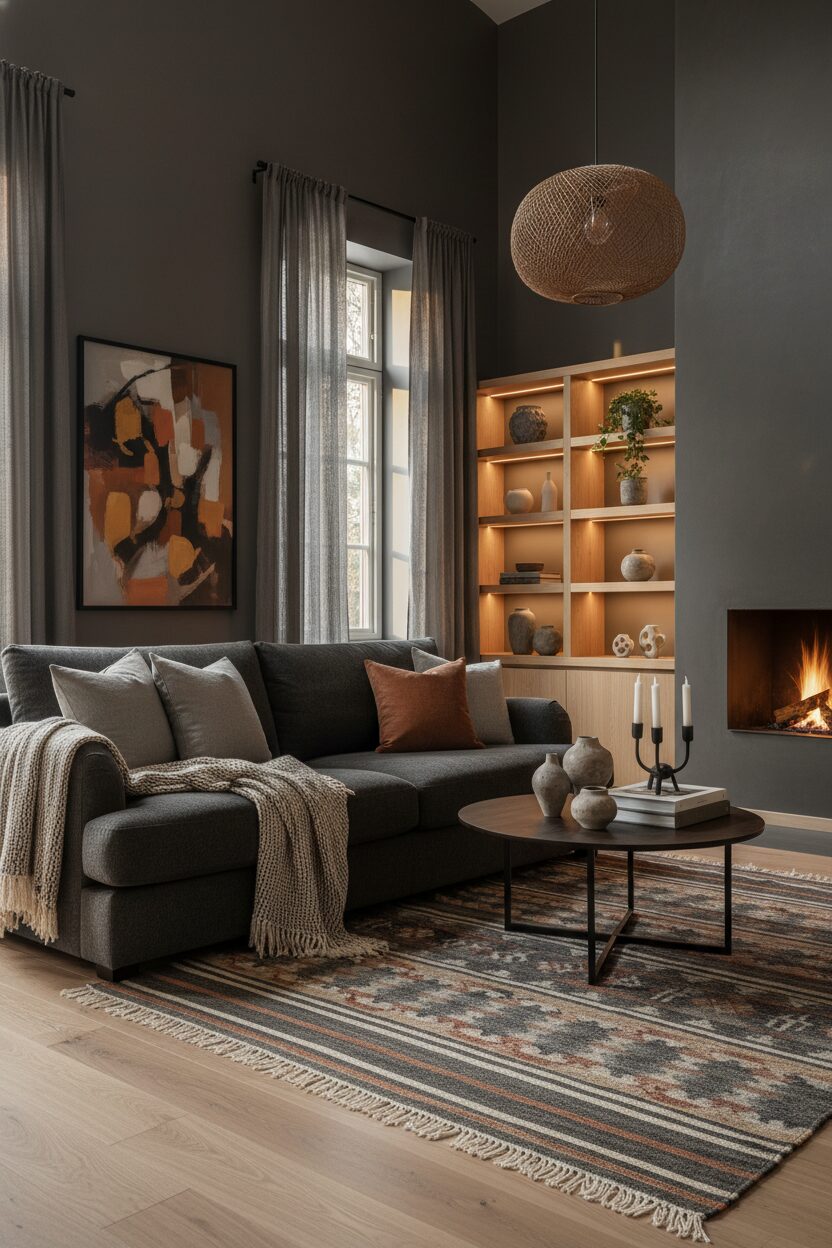
Charcoal gray with distinct warm undertones serves as a modern replacement for black providing deep contrast while maintaining a soft and inviting edge. This powerful color is best utilized on statement pieces like a central fireplace or a plush area rug. The warmth in the gray prevents it from feeling cold or industrial ensuring it aligns with the hygge philosophy of comfort. Against a backdrop of warm wood and pale textiles charcoal gray adds a necessary dramatic flair that defines the living room identity. This final color choice completes the earthy palette by adding depth and immense visual interest here.
Leave a Reply