
Creating a sanctuary within the home begins with the deliberate choice of minimalism to foster a truly tranquil atmosphere for rest. This design philosophy emphasizes the beauty of simplicity by removing unnecessary distractions and focusing on essential elements that promote mental clarity and physical relaxation. By integrating soft textures with a muted color palette, one can transform a standard sleeping area into a serene retreat that feels both spacious and intimate. A well executed minimalist bedroom serves as a personal haven where the stresses of daily life simply melt away under the influence of thoughtful architectural lines and curated materials.
Monochromatic Color Palettes

The foundation of a minimalist bedroom often rests upon a monochromatic color palette which utilizes various shades of a single hue to create depth. Soft whites, warm beiges, and cool grays provide a neutral backdrop that instantly calms the visual senses and expands the perceived volume of the room. By layering these subtle tones through wall paint, bedding, and floor treatments, the space achieves a cohesive look that feels unified and intentional. This strategy prevents the eye from becoming overwhelmed by clashing colors and instead encourages a sense of rhythmic continuity which is vital for fostering a peaceful and environment.
Low Profile Furniture Solutions
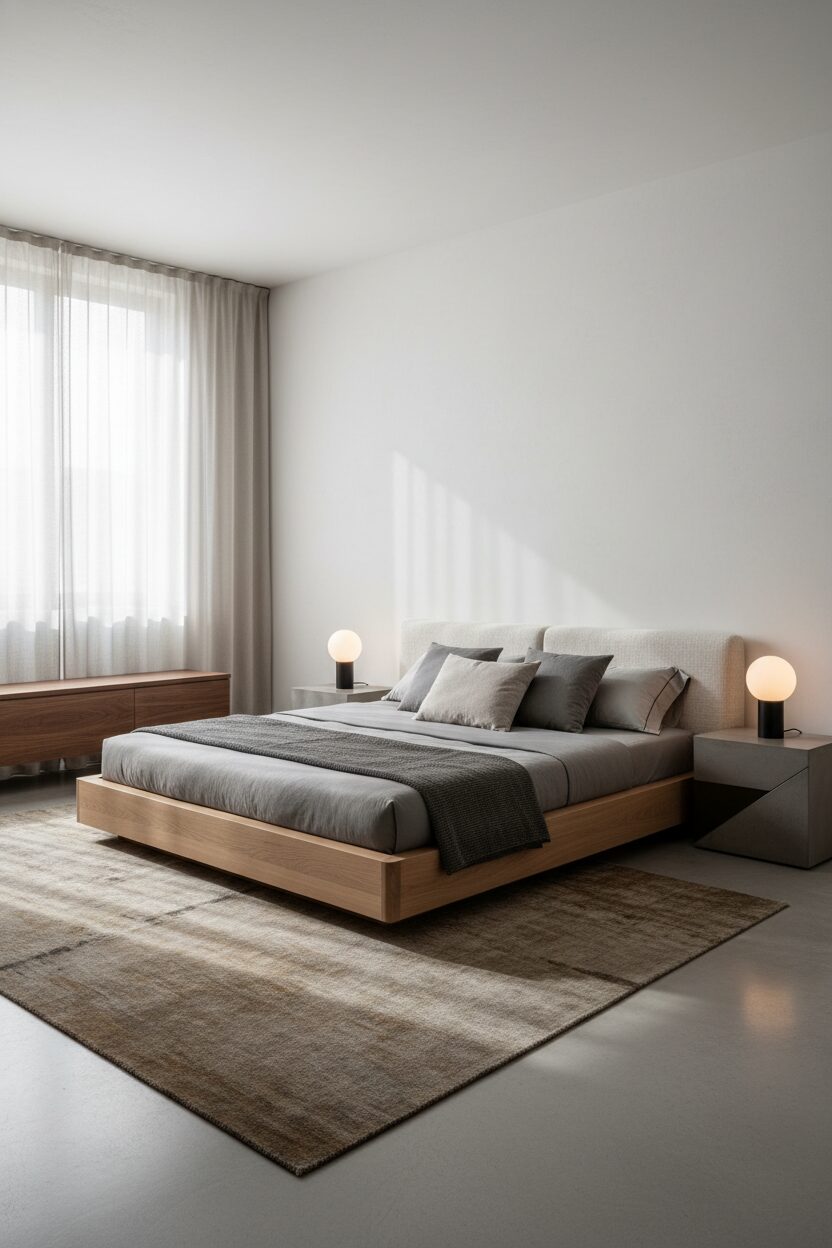
Selecting low profile furniture is a hallmark of minimalist design that significantly influences the spatial dynamics of a cozy bedroom. Platform beds that sit close to the ground create an illusion of higher ceilings while providing a stable and grounded focal point for the room. This architectural choice minimizes visual bulk and maintains an open line of sight across the floor area which enhances the feeling of breathability. When paired with streamlined nightstands that lack ornate hardware the furniture remains functional without being intrusive. Such arrangements prioritize horizontal lines that lead the eye smoothly through the space without any interruption.
Natural Light Integration
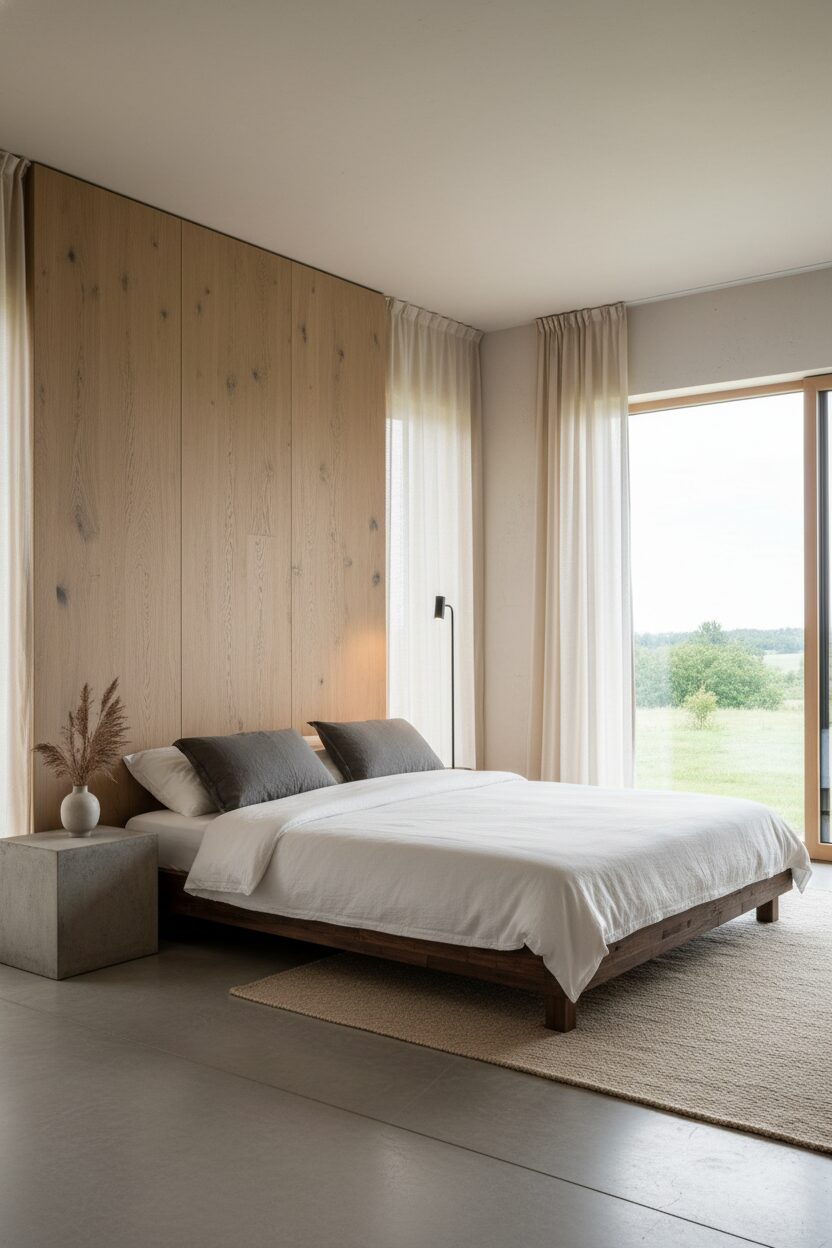
Natural light serves as a primary element in minimalist interiors by highlighting the cleanliness of the design and emphasizing various textures. Large windows should ideally be left unobstructed or dressed with sheer linen curtains that diffuse sunlight into a soft and ethereal glow throughout the day. This connection to the outside world helps to regulate the circadian rhythm while making the bedroom feel much more vibrant and alive. By allowing light to bounce off neutral walls, the space gains a sense of ethereal lightness that supports a relaxing vibe. Clear glass panels and mirrors can further amplify this natural illumination.
Tactile Material Selection

In a minimalist space where visual clutter is absent the quality of materials becomes paramount for establishing a cozy atmosphere. Selecting high quality natural fibers like organic cotton and soft wool for bedding introduces essential tactile variety that prevents the room from feeling sterile. A thick woven rug placed over hardwood floors adds warmth underfoot and provides a necessary contrast to the smooth surfaces of minimalist furniture. These materials engage the senses and ground the design in comfort through their physical presence. By focusing on the interplay of rough and smooth surfaces one creates a layered and inviting sleeping environment.
Hidden Storage Integration
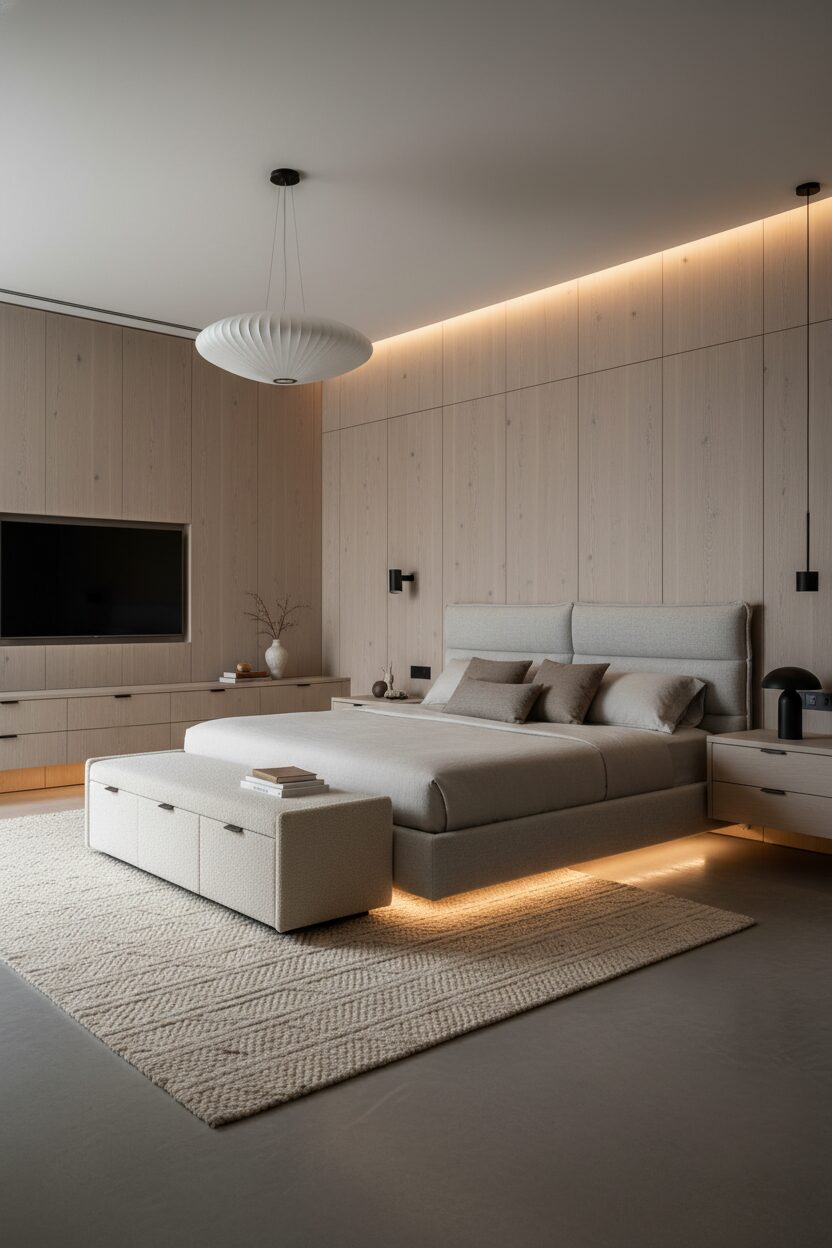
Maintaining a relaxing vibe requires the complete elimination of visible clutter through the clever use of hidden storage solutions. Built in wardrobes with seamless handles or touch latch mechanisms blend directly into the walls to maintain a clean architectural silhouette throughout the entire room. Under bed drawers and recessed shelving provide ample space for belongings while keeping them entirely out of sight and away from the mind. This organized approach to storage ensures that the bedroom remains a dedicated zone for rest rather than a multipurpose storage area. Clean surfaces promote a sense of order that is essential for relaxation.
Ambient Lighting Schemes
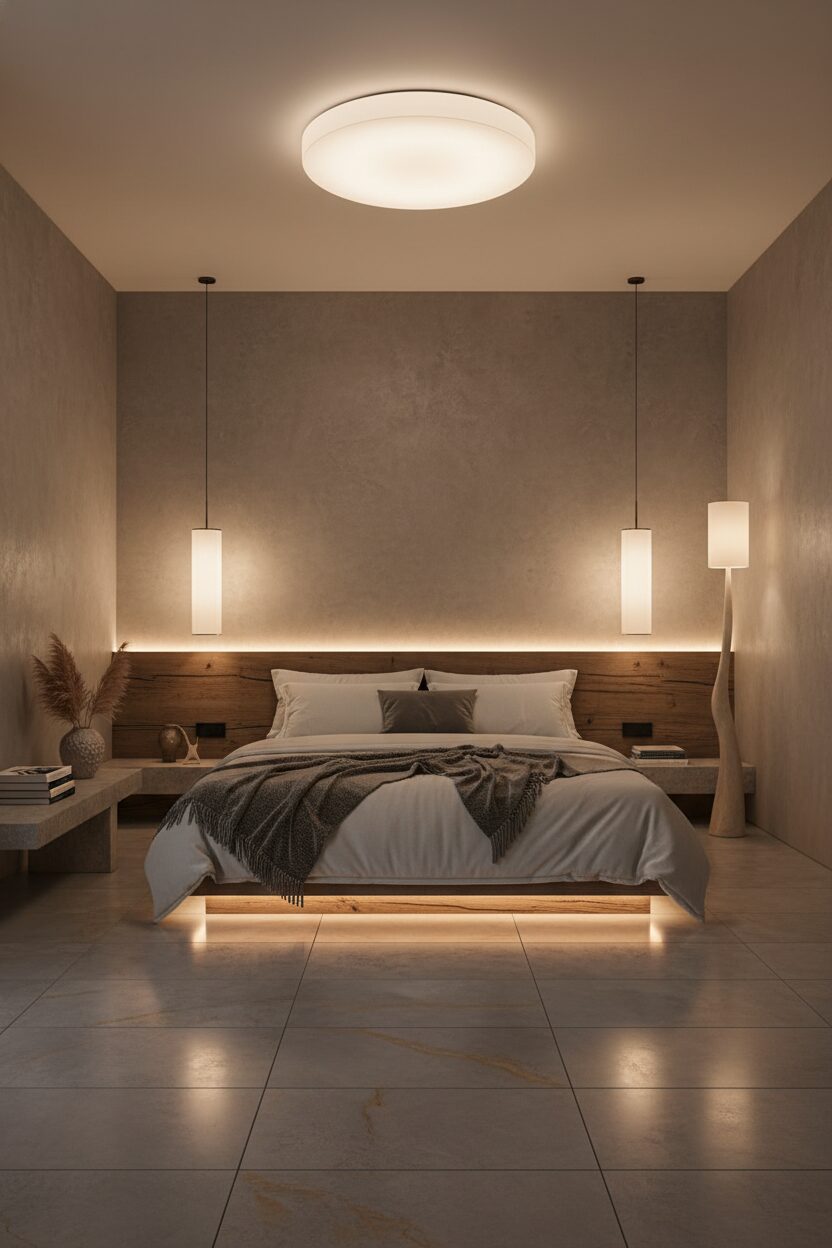
Effective lighting in a minimalist bedroom avoids harsh overhead sources and instead relies on layered ambient light to set the mood. Dimmable recessed lights combined with sculptural bedside lamps provide soft illumination that can be adjusted based on the time of day. Wall sconces with warm light bulbs add an architectural element while keeping the nightstands free from unnecessary objects. This intentional placement of light sources creates soft shadows and highlights the clean lines of the furniture. Proper lighting transforms the room into a cozy retreat where the warm glow encourages a slow transition into a restful and peaceful sleep.
Minimalist Art Selection

Art in a minimalist bedroom should be carefully curated to enhance the sense of tranquility without overwhelming the space. A single large scale piece of abstract art or a series of simple line drawings can provide a sophisticated focal point for the room. Choosing artwork with a limited color palette that mirrors the tones of the interior creates a harmonious visual experience. The placement of the art should be intentional such as centered above the headboard to provide balance and symmetry. This restraint in decoration allows the chosen pieces to truly resonate and add character to the overall minimalist aesthetic.
Biophilic Design Elements

Integrating biophilic elements into a minimalist bedroom design bridges the gap between the indoors and the natural world. A few well placed indoor plants like a snake plant or a fiddle leaf fig introduce organic shapes and vibrant greens that breathe life into a neutral space. These living accents not only improve air quality but also provide a calming presence that reduces stress levels. Using natural wood finishes for furniture or flooring further strengthens this connection to nature through earthy textures and patterns. This fusion of minimalism and nature creates a grounded and peaceful sanctuary for ultimate relaxation and rest.
Leave a Reply