The Japandi aesthetic represents a masterful fusion of Japanese minimalism and Scandinavian functionality that continues to redefine modern interior design standards for twenty twenty six. This harmonious style emphasizes a profound appreciation for organic materials and deliberate spatial arrangements while prioritizing emotional tranquility within the home environment. By blending the rustic warmth of northern European decor with the timeless elegance of eastern philosophy homeowners can cultivate a sanctuary that feels both contemporary and grounded. As we look toward the future of living room architecture the integration of sustainable elements and soft neutral palettes creates a sophisticated backdrop for everyday life.
Low Profile Furniture Foundations

Incorporating low profile furniture is essential for capturing the grounded essence of traditional Japanese interiors while maintaining the clean lines characteristic of Scandinavian modernism. When selecting a sofa consider a deep seated modular piece upholstered in a textured oatmeal linen fabric that sits close to the floor to enhance the perceived height of your ceilings. This architectural choice encourages a relaxed posture and a physical connection to the earth which fosters a sense of calm. Complement this central piece with a solid light oak coffee table that features rounded edges and a matte finish to soften the visual room landscape.
Textural Layering with Natural Fibers

Texture plays a pivotal role in Japandi design by adding depth and tactile interest without the need for excessive ornamentation or vibrant colors. Begin by layering a large jute or sisal rug over light wood flooring to provide a rugged organic foundation for the entire space. Over this base introduce a smaller wool rug with a subtle cream weave to introduce softness underfoot and create a cozy atmosphere. Incorporating various textiles like chunky knit throws and smooth silk cushions will bridge the gap between rustic Nordic vibes and refined Japanese precision while maintaining a cohesive and inviting overall visual appearance.
Harmonious Neutral Color Palettes
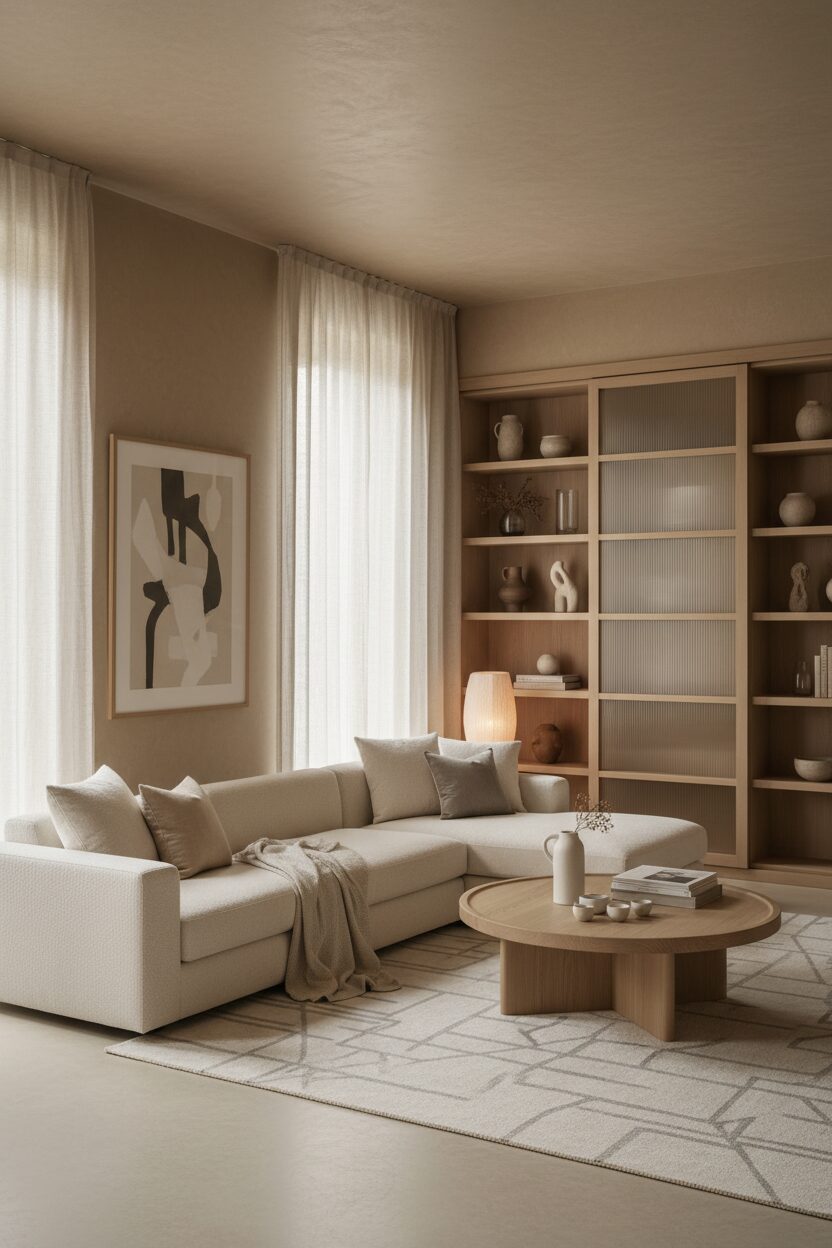
The color theory of twenty twenty six favors a palette that is anchored in warm neutrals and muted earth tones to evoke serenity. Start with a base of soft beige or warm gray on the walls to provide a clean canvas that reflects natural light beautifully throughout the day. Layer in darker accents such as charcoal or deep forest green through decorative ceramics and artwork to provide visual weight and prevent the room from feeling washed out. This balance of light and dark creates a sophisticated contrast that highlights the architectural beauty of your furniture while keeping the overall mood.
Biophilic Integration and Greenery

Bringing nature indoors is a fundamental tenet of the Japandi style that enhances the well being of every inhabitant within the home. Instead of cluttered floral arrangements opt for a single architectural plant like a tall fiddle leaf fig or a sculptural bonsai tree to act as a living focal point. Position these plants in corners where they can receive filtered sunlight while casting delicate shadows across the floor to add a dynamic layer of movement. Choosing clay or terracotta pots with matte finishes ensures that the greenery remains the primary focus while supporting the organic and earthy design aesthetic.
Strategic Lighting for Ambience

Lighting should be approached with a focus on creating a warm glow that mimics the soft light of a setting sun. Replace harsh overhead fixtures with a combination of paper lantern pendants and sleek metallic floor lamps to create layers of illumination. Large rice paper lamps provide a diffused light that eliminates harsh shadows and promotes a sense of calm during evening hours. Use dimmable smart bulbs to adjust the intensity based on the time of day which allows the living room to transition from a bright functional space to a cozy intimate retreat for relaxation and for quiet reflection.
Mindful Minimalism and Storage

Maintaining a clutter free environment is vital for preserving the intentionality of a Japandi living room where every object serves a purpose. Invest in high quality built in cabinetry that features seamless handleless doors to provide ample storage while blending into the walls. By hiding everyday items behind these minimalist facades you allow the beauty of the architectural lines and curated decorative pieces to stand out. Consider using woven baskets made from seagrass to organize smaller essentials which adds a touch of rustic texture to the sleek storage solutions while keeping the space organized and also very highly visually appealing.
Curated Art and Meaningful Decor

The selection of artwork should be a deliberate process that prioritizes quality over quantity to avoid overwhelming the visual senses. Focus on a few large scale pieces that feature abstract shapes or delicate line drawings in a monochromatic color scheme. These artworks should be framed in simple wooden frames that match the other timber elements in the room for a unified look. Additionally consider displaying a single piece of handcrafted pottery on a floating shelf to celebrate the beauty of imperfection known as wabi sabi. This careful curation ensures that each decorative element contributes to the overall narrative of serenity.
Fluid Spatial Layouts and Flow

Spatial arrangement is the final piece of the Japandi puzzle which focuses on creating a sense of flow and openness. Arrange your furniture to facilitate easy movement while defining distinct zones for different activities like reading or conversing with guests. Use low profile dividers such as open slatted wood screens to separate areas without blocking natural light or visual pathways across the living room. By leaving ample negative space between each furniture grouping you allow the room to breathe and maintain a light airy feeling. This intentional layout promotes a harmonious environment where every corner feels connected and also designed.
Leave a Reply