
Scandinavian design gracefully balances functional minimalism with an inviting warmth that transforms any modern living room into a serene sanctuary. While traditional northern aesthetics often emphasize neutral palettes, contemporary interpretations introduce vibrant hues to elevate the sensory experience of a home interior. By blending clean architectural lines with playful color theory, designers create spaces that feel both orderly and full of life. This approach focuses on the intentional selection of natural materials like light woods and woven textiles alongside bold pigments. Every element serves a specific purpose, ensuring that the final composition remains sophisticated yet deeply personal for every resident.
The Foundation of Pastel Palettes

The journey toward a colorful Scandinavian living room begins with the careful integration of soft pastel foundations. Instead of stark white walls, designers often choose a gentle blush or a muted mint to provide a subtle backdrop for the room. This architectural choice enhances the natural light that filters through large windows, creating a soft glow that dances across the blonde oak flooring. The furniture within this space maintains its iconic midcentury silhouette but features upholstery in contrasting pastel tones. This delicate balance of color theory ensures the environment remains airy and light while introducing a distinct sense of character.
Geometric Accents and Primary Colors

Incorporating bold primary colors within a Scandinavian framework requires a masterful use of geometric patterns and spatial arrangement. A vibrant primary yellow armchair might serve as the focal point against a cool gray rug, grounding the visual weight of the seating area. Designers utilize clean lines to guide the eye toward these pops of color, ensuring they do not overwhelm the minimalist architecture. By placing a cobalt blue shelving unit along a neutral wall, the room gains structural depth and artistic flair. This strategy proves that small splashes of intensity can significantly redefine the atmosphere without sacrificing overall modern tranquility.
Layered Textiles in Terracotta Tones

Warmth is a critical element in northern design, often achieved through the layering of earthy terracotta textiles within the living space. Imagine a sprawling sectional sofa draped in thick wool throws and plush linen cushions in varying shades of burnt orange and sienna. These organic colors provide a striking contrast to the coldness of stone or metal accents often found in industrial Scandinavian homes. The tactile variety of the fabrics invites residents to linger, while the color palette evokes a sense of grounding. Through thoughtful material selection, the room becomes a cozy hub where visual interest meets pure physical comfort.
Natural Wood and Forest Green Accents

Connecting the interior with the natural world is a hallmark of Scandinavian living, particularly through the use of forest green accents. This deep hue works harmoniously with light colored timber, such as birch or ash, commonly used for flooring and cabinetry. By integrating tall indoor plants or a velvet emerald green ottoman, you introduce a lush vitality that mimics the serene Nordic wilderness. The spatial arrangement allows for open pathways, ensuring that the dark green elements do not crowd the room. This organic synergy between natural materials and deep pigments fosters a refreshing environment that encourages deep relaxation and mindfulness.
Sculptural Lighting in Gold and Copper

Lighting serves as both a functional necessity and an artistic statement in the colorful modern living room. Sculptural fixtures in warm metallic finishes like gold or copper provide a radiant contrast against colorful painted surfaces. A large artichoke pendant lamp suspended over the coffee table can distribute light evenly while acting as a metallic crown for the space. These materials reflect the artificial and natural light, adding a shimmering dimension to the room’s color story. By choosing fixtures with clean curves and metallic warmth, designers enhance the overall luxury and sophistication without complicating the essential Scandinavian simplicity of the design.
Art Galleries with Bold Abstract Shapes

Transforming a blank wall into a curated art gallery is an excellent way to introduce color and personality. In a Scandinavian living room, abstract prints with bold shapes and primary colors provide a modern edge to the traditional aesthetic. These artworks should be arranged in a deliberate grid or a staggered cluster to maintain visual order while celebrating creative expression. The frames should remain minimalist, perhaps in light wood or thin black metal, to keep the focus on the art itself. This approach allows the resident to frequently update the color scheme and visual energy of the entire living area.
Soft Pastel Rugs for Zonal Definition

Defining functional zones in an open concept living room is best achieved through the strategic placement of colorful area rugs. A large rug in a soft lavender or dusty rose can anchor the central seating group, separating it from the dining or work zones. These rugs feature subtle textures or simple geometric patterns that complement the furniture without being distracting. The choice of high quality wool or woven cotton ensures durability while adding a layer of warmth to the floor. By using color for zonal definition, the room feels organized and purposeful, showcasing the practical brilliance of modern Scandinavian planning.
Glossy Ceramic and Matte Glass Accessories
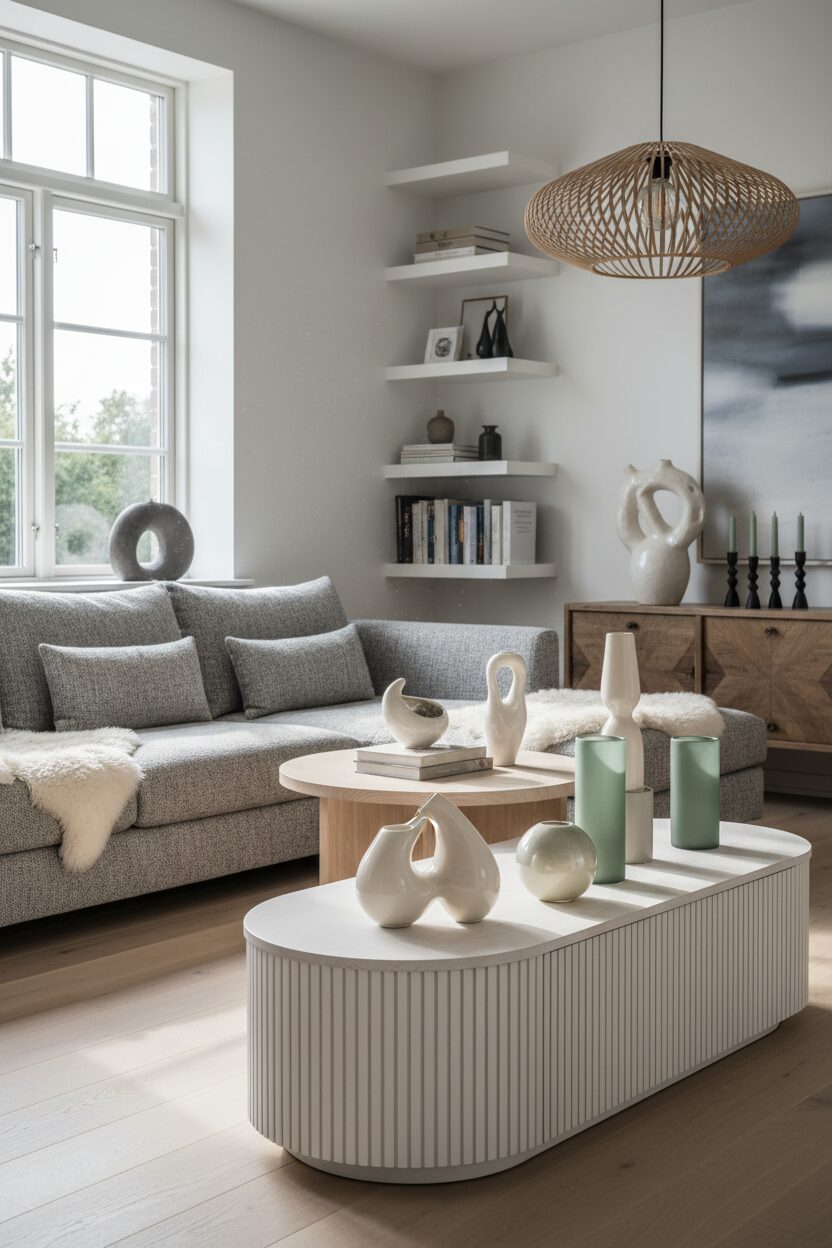
Finalizing the colorful Scandinavian living room involves the addition of curated accessories in varied finishes like ceramic and glass. Small decorative objects in bold mustard yellow or sky blue can be displayed on a minimalist mantel or coffee table. Mixing glossy ceramic vases with matte glass candle holders creates a sophisticated play of light and shadow. These small touches allow for the introduction of pops of color that are easy to change with the seasons. By focusing on material variety and color theory, the final styling becomes a celebration of light, form, and texture that completes the vibrant home sanctuary.
Leave a Reply