
Creating a sanctuary within the home requires a deliberate focus on simplicity and the elimination of unnecessary clutter to foster true relaxation. Minimalist bedroom design prioritizes the essential elements that promote rest while embracing a sophisticated aesthetic that feels both modern and timeless. By carefully selecting every piece of furniture and every texture, one can transform a chaotic sleeping space into a serene retreat that encourages deep restoration. This journey into minimalist interiors explores how light, material, and spatial harmony work together to craft an environment where the mind can finally settle after a long day of constant activity today.
Monochromatic Palettes and Soft Neutrals

Achieving a sense of calm begins with a restrained color palette that emphasizes soft whites, warm beiges, and gentle greys. These tones work in harmony to reflect natural light and create an expansive atmosphere that feels breathable and light. By avoiding jarring contrasts or overly vibrant hues, the room maintains a visual equilibrium that invites the eyes to rest without distraction. Subtle shifts in shade can add depth without cluttering the visual field, ensuring the space remains cohesive and grounded. This foundational approach to color establishes a soothing backdrop where every other element can coexist in a peaceful, quiet balance.
The Art of Hidden Storage Solutions

Minimalist design thrives on the absence of visual noise, which makes clever storage essential for maintaining a clean environment. Custom integrated wardrobes that blend seamlessly with the walls can hide personal items away while preserving the architectural integrity of the room. By utilizing floor to ceiling cabinetry with handleless doors, the eye experiences a continuous surface that feels like a natural part of the structure. This strategic organization ensures that surfaces like nightstands and dressers remain clear of daily clutter. Consequently, the bedroom becomes a dedicated zone for sleep rather than a repository for many disorganized objects of life today.
Natural Materials and Organic Textures

In a minimalist bedroom, the tactile quality of materials replaces the need for ornate decoration or bright colors. Incorporating raw elements like light oak wood, polished concrete, or natural stone brings an organic warmth that feels grounding and sophisticated. Soft textiles such as linen bedding and wool rugs provide essential layers of comfort while maintaining a refined aesthetic throughout the entire space. These natural materials age beautifully over time, adding a sense of history and character to the room. By focusing on quality over quantity, each piece of material serves a specific purpose, creating a rich sensory experience for everyone.
Low Profile Furniture and Spatial Flow

Low profile furniture is a hallmark of minimalist design as it creates the illusion of higher ceilings and a more open floor plan. A platform bed frame with clean lines and no footboard allows the room to breathe while emphasizing a horizontal orientation that feels inherently restful. This choice in furniture height encourages a better flow of energy and light throughout the space, making even smaller bedrooms feel much more expansive. When the bed sits closer to the floor, it connects the sleeper to the earth, enhancing the overall feeling of stability and peace within the private sanctuary environment easily.
Curated Lighting for Ambiance and Depth
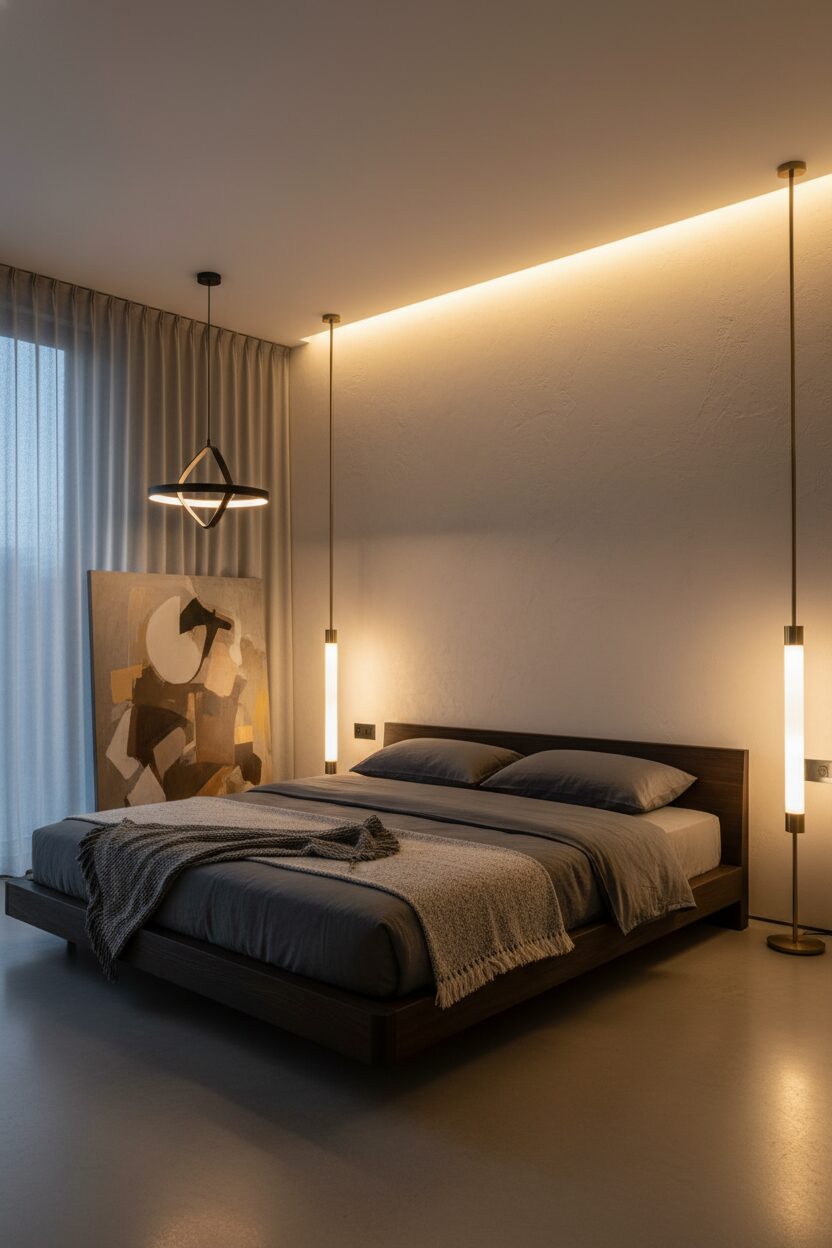
Lighting serves as the invisible architecture of a minimalist bedroom, defining the mood and highlighting the room’s carefully chosen textures. Instead of a single harsh overhead light, a layered approach using recessed fixtures and architectural sconces creates a soft and inviting glow. Warm light temperatures are preferred to foster a cozy atmosphere that signals the body it is time to wind down. Dimmable options allow for complete control over the intensity of illumination, adapting to different times of day. By keeping the fixtures themselves minimal in design, the focus remains on the light and how it transforms the entire space.
Statement Art as a Focal Point
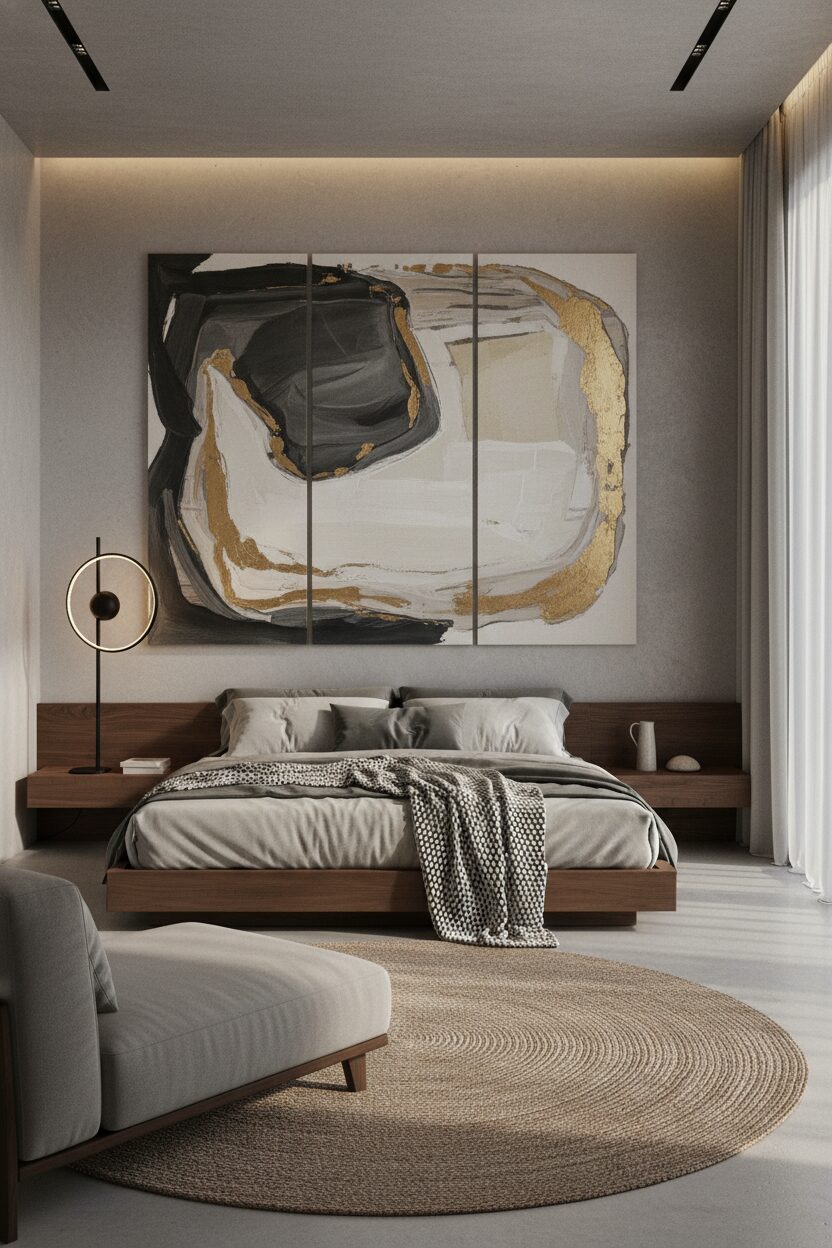
In a space defined by simplicity, a single piece of statement art can act as a powerful focal point that anchors the entire design. Choosing one large scale painting or a sculptural installation allows the room to have personality without feeling overcrowded with many small objects. The artwork should complement the existing color palette while offering a subtle point of interest that draws the eye. This intentional selection reinforces the minimalist philosophy that fewer, higher quality pieces carry more emotional weight than a collection of minor items. It transforms a simple wall into a meaningful and deep cultural expression now.
Soft Drapery and Light Control

Window treatments play a crucial role in minimalist bedrooms by softening the hard lines of the architecture while providing necessary privacy. Using floor length curtains made from lightweight fabrics like sheer linen or fine cotton allows natural light to filter through gently. This creates a dreamlike quality that enhances the overall serenity of the sleeping area. The fabric should ideally match the wall color to minimize visual breaks, ensuring the room feels cohesive and unified. By choosing simple rod designs and avoiding heavy tassels or ornate patterns, the drapery adds a layer of quiet luxury that feels incredibly modern today.
Functional Simplicity in Bedside Styling
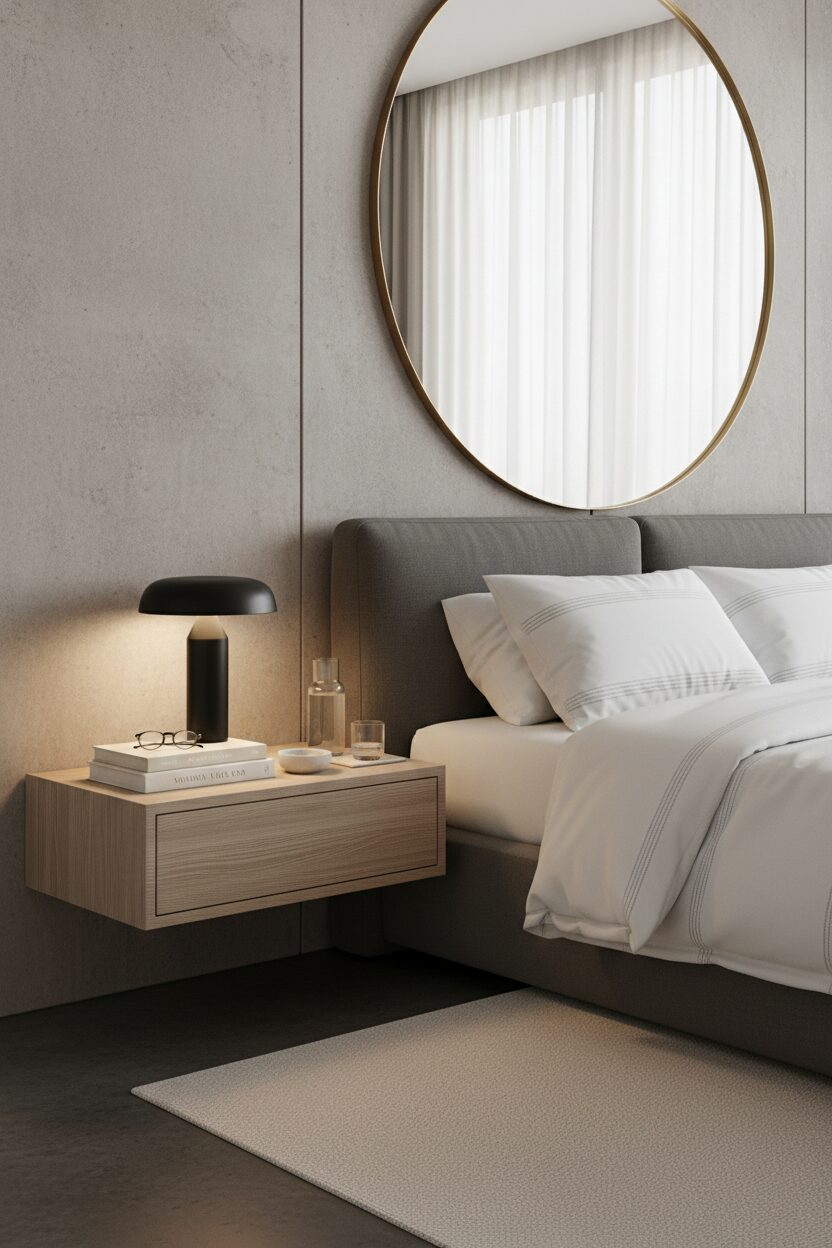
The bedside area should be a model of functional simplicity, containing only the items necessary for a restful evening. A slim nightstand with a single drawer can house essential items like a book or a pair of glasses, keeping them out of sight. A single ceramic carafe for water or a small potted plant can add a touch of life without cluttering the surface. This focused approach ensures that the environment around your head remains clear and peaceful as you prepare for sleep. By removing excess distractions, the bedside becomes a place of intentional rest and quiet contemplation for all.
Leave a Reply