The Japandi aesthetic represents a seamless fusion between Japanese minimalism and Scandinavian functionality creating a serene sanctuary within the modern master bedroom. This design philosophy emphasizes organic materials and clean lines to foster an atmosphere of intentional tranquility. By merging the warmth of northern textures with the disciplined elegance of eastern simplicity you can transform your sleeping quarters into a restorative retreat. Achieving this balance requires a thoughtful approach to color palettes and spatial harmony. Every design choice should prioritize comfort while maintaining a sense of visual clarity and purpose to ensure the space remains both timeless and profoundly restorative.
Embracing a Muted and Earthy Color Palette

To establish a true Japandi foundation you must select a palette that emphasizes earth tones and soft neutrals. Focus on shades like warm oatmeal and cool stone gray to bridge the gap between Scandi brightness and Japanese earthiness. These colors interact beautifully with natural light reflecting a soft glow throughout the day. Avoid harsh whites in favor of creamier tones that provide a sense of warmth and depth. By layering these subtle variations across the walls and bedding you create a cohesive visual field. This monochromatic approach reduces visual noise and invites the mind to settle into deep restful relaxation.
Incorporating Low Profile Furniture Arrangements
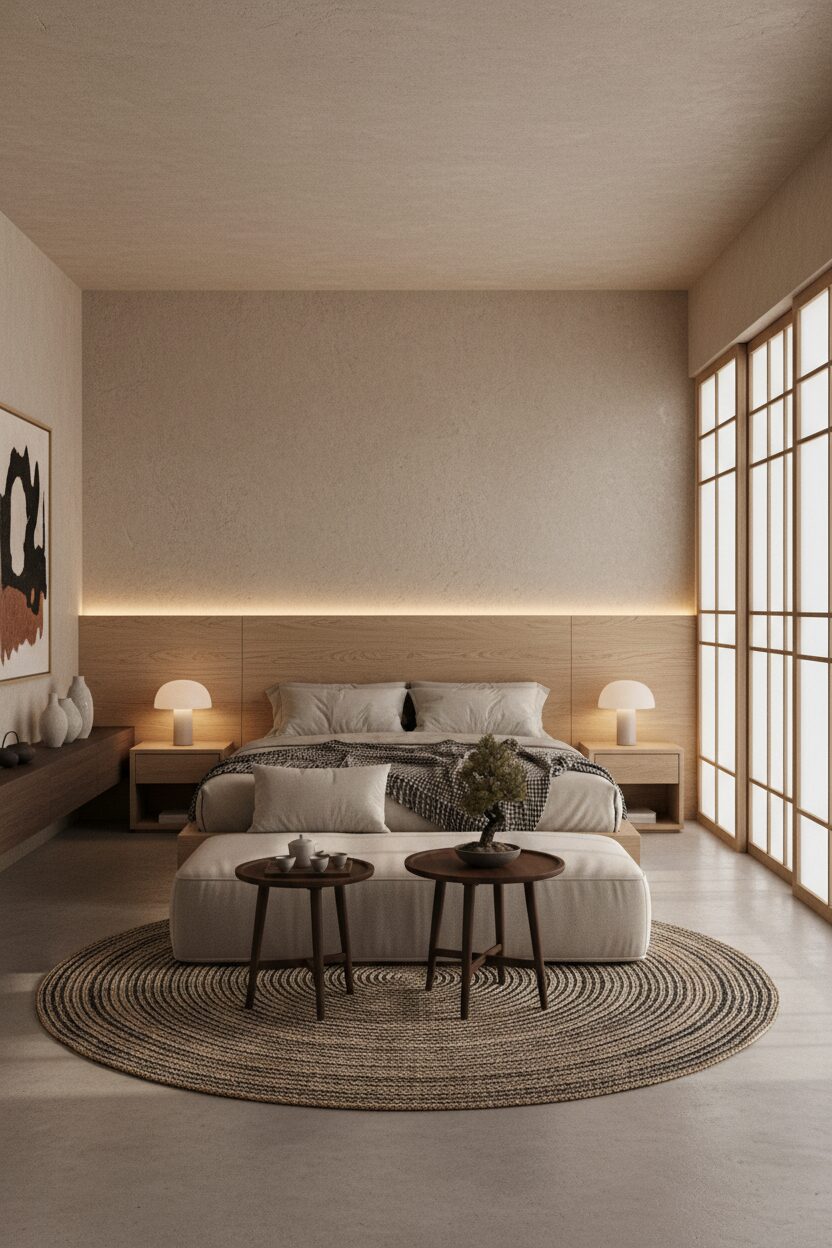
The layout of a Japandi bedroom should prioritize a low center of gravity to enhance the feeling of openness. Select a platform bed frame made from light oak or walnut that sits close to the floor mirroring traditional Japanese sleeping arrangements. This architectural choice draws the eye downward making the ceilings appear much taller and the room more spacious. Complement this central piece with minimalist nightstands that feature clean profiles and hidden storage. By keeping furniture heights consistent you create a steady horizontal line that guides the gaze smoothly across the entire environment. This spatial strategy promotes a grounded atmosphere.
Integrating Natural Materials and Textures
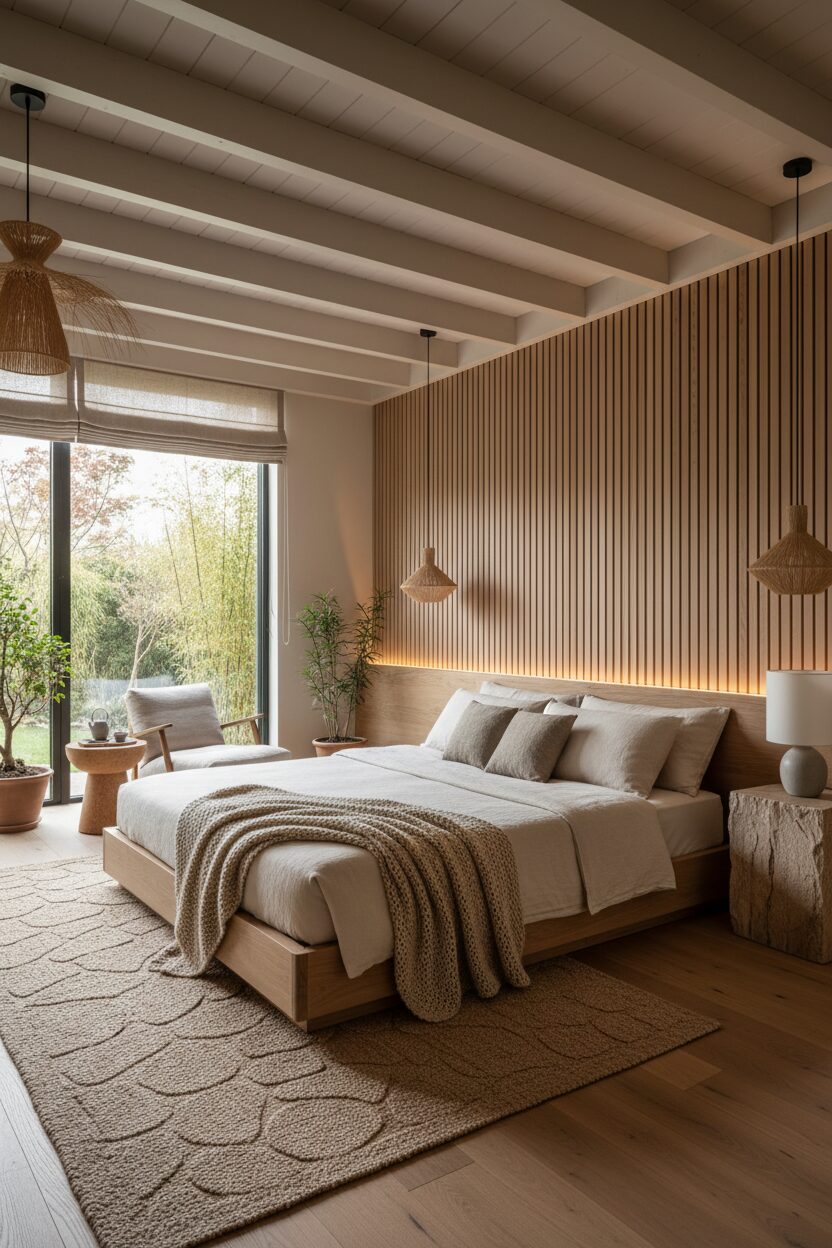
Texture plays a vital role in adding sensory depth to a minimalist room. Incorporate a variety of natural materials such as light timber linen and woven rattan to introduce tactile warmth. A soft wool rug placed beneath the bed provides a comforting contrast to the sleek wooden flooring. Use heavy linen curtains that filter light softly while adding a subtle organic pattern to the windows. These materials celebrate the beauty of imperfection known as wabi sabi in Japanese culture. Combining these raw elements with refined Scandi finishes results in a sophisticated space that feels deeply connected to the living nature.
Designing with Soft Ambient Lighting Schemes
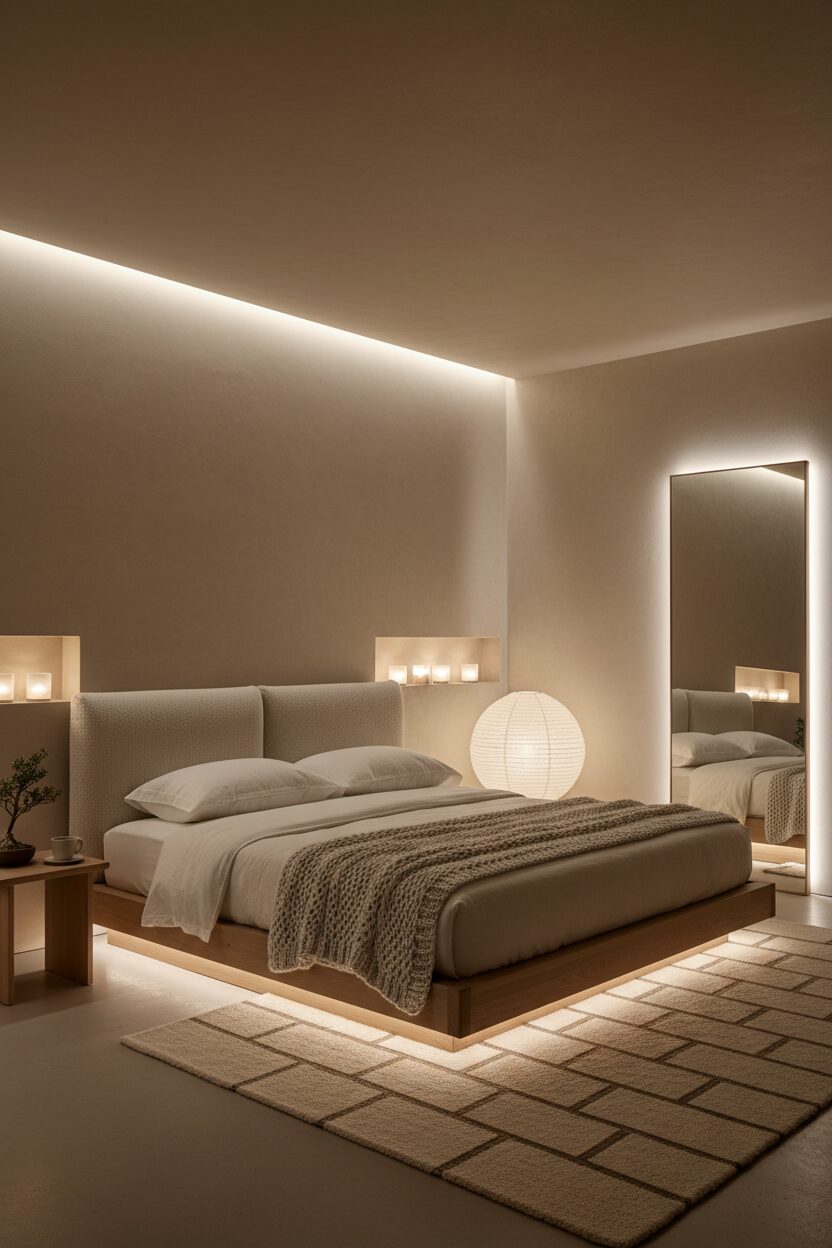
Proper lighting is essential for creating a mood of quiet sophistication within the bedroom. Opt for light fixtures that utilize natural materials like rice paper or light wood to maintain the Japandi theme. Wall mounted sconces with dimmable settings allow you to control the intensity of light throughout the evening. Consider a large sculptural pendant light made from bent wood to serve as a soft focal point above the bed. Avoid harsh overhead lighting that creates stark shadows. Instead use layered sources of warm light to build a gentle glow that emphasizes the natural textures present in the modern room.
Practicing Intentional Minimalism and Decluttering
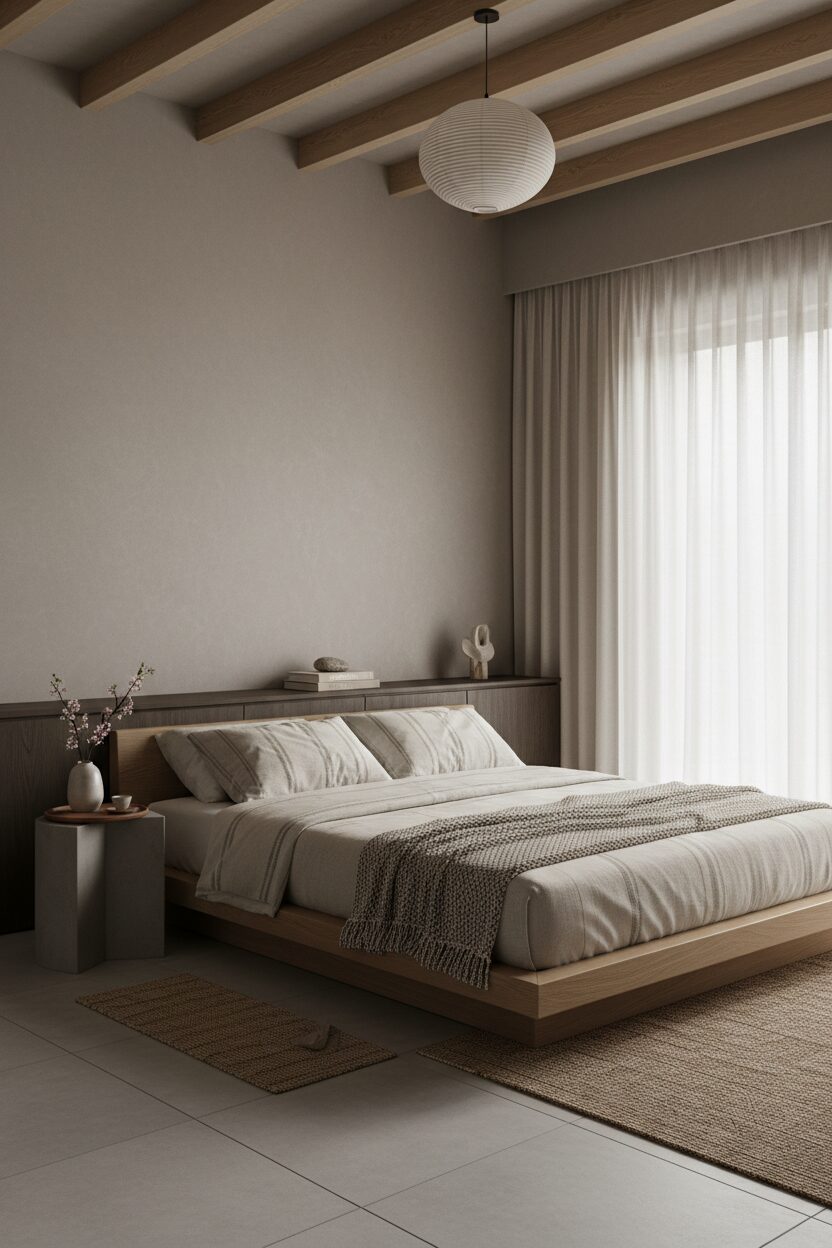
A cluttered space leads to a cluttered mind so intentional decluttering is a core requirement for a master bedroom. Focus on high quality storage solutions that hide daily essentials while keeping the visual field clear. Choose built in wardrobes with seamless handles that blend into the walls to maintain architectural continuity. Display only a few carefully curated items such as a single ceramic vase or a favorite book to add personality without excess. By removing unnecessary distractions you allow the architectural lines of the room to shine. This disciplined approach ensures that your bedroom remains a peaceful and organized sanctuary.
Introducing Biophilic Elements and Greenery

Bringing the outdoors inside is a fundamental aspect of both Japanese and Scandinavian design traditions. Introduce biophilic elements by placing a large potted plant like a fiddle leaf fig in a corner to provide a splash of natural color. Smaller succulents or dried branches can also be displayed on shelves to add organic shapes to the clean lines of the room. These living elements improve air quality while creating a visual bridge to the natural world. Ensure that the planters are made from ceramic or stone to stay consistent with the earthy palette. This vital connection to nature promotes wellness.
Selecting Functional and Textural Bedding Layers

Bedding serves as the central focal point of the bedroom and should reflect the comfort of Scandi style. Layer a variety of fabrics including organic cotton sheets a light linen duvet and a chunky wool throw. This combination provides both visual depth and physical comfort throughout the different seasons. Choose colors that remain within the neutral spectrum to maintain a cohesive look. The mix of textures adds a luxurious feel without requiring bright colors or busy patterns. By focusing on high quality materials you enhance the tactile experience of the room while staying true to the minimalist and functional aesthetic.
Emphasizing Spatial Flow and Open Floor Plans

The final step in mastering Japandi design is ensuring that the spatial arrangement allows for effortless movement. Arrange furniture to maximize the open floor area and avoid crowding the pathway to the bed. Use sliding doors or screens made of translucent glass or wood to divide spaces without blocking the flow of light. This architectural technique maintains a sense of privacy while preserving the openness of the master suite. Every piece of furniture should have a designated place that supports the overall balance. A well planned layout creates a rhythmic flow that makes the bedroom feel expansive calm and balanced.
Leave a Reply