The Japandi master bedroom serves as a serene sanctuary where Scandinavian functionality meets Japanese minimalism to create an atmosphere of profound tranquility and balance. This design aesthetic prioritizes intentional living by blending clean lines with warm organic textures that invite a sense of peace into your private retreat. By focusing on essential elements rather than excessive ornamentation you achieve a space that feels both grounded and airy. Every design choice from the selection of natural timbers to the soft diffusion of light works in harmony to foster relaxation. Embracing this style transforms your sleeping quarters into a sophisticated haven today.
Low Profile Japanese Bed Styles

The foundation of a Japandi bedroom begins with a low profile platform bed that emphasizes a strong connection to the earth. This architectural choice draws inspiration from traditional Japanese floor sleeping while incorporating modern Scandinavian ergonomics for ultimate comfort. By keeping the bed frame close to the ground you visually expand the vertical space of the room which creates an airy and open environment. Select a frame crafted from light oak or warm walnut to introduce natural grain patterns into the decor. The absence of a bulky headboard allows the wall behind to remain a clean canvas for artistic expression.
Scandinavian Neutral Color Palettes
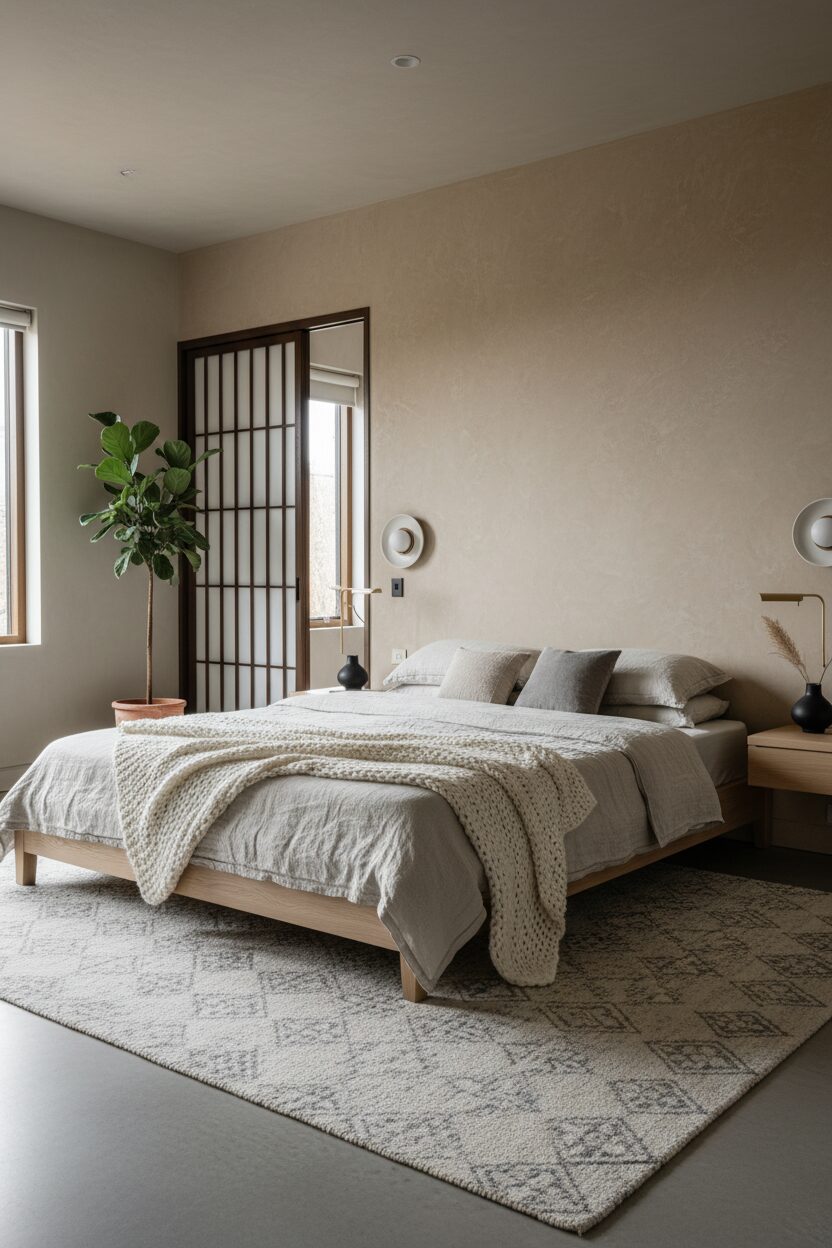
Color theory in a Japandi master suite revolves around a sophisticated palette of muted earthy tones that evoke a sense of calm. Think of soft greys cream whites and warm beiges that blend seamlessly to create a cohesive backdrop for rest. These neutral shades are punctuated by deep charcoal or forest green accents to add depth without overwhelming the senses. The goal is to mimic the natural world by using colors found in stone clay and sand. This approach ensures that the bedroom remains timeless and versatile while providing a gentle visual transition between the various textures found throughout space.
Organic Material Texture Integration

To achieve the quintessential Japandi feel you must prioritize tactile natural materials that bring warmth and authenticity to the room. Incorporate high quality linen bedding in oatmeal hues alongside wool throws for a layered and cozy aesthetic. Bamboo elements or rattan accents can be introduced through bedside lighting or small furniture pieces to add an organic touch. These materials not only feel wonderful against the skin but also age gracefully over time which adds a layer of wabi sabi appreciation for imperfection. Every surface should invite touch and provide a sensory experience that grounds the inhabitant within their peaceful surroundings.
Washi Paper Light Diffusion

Lighting plays a crucial role in defining the mood of a Japandi bedroom where soft diffusion is preferred over harsh overhead fixtures. Consider installing a large rice paper pendant light as a central focal point to emit a warm and gentle glow throughout the space. This nod to Japanese paper lanterns provides a soft texture that contrasts beautifully with clean Scandinavian furniture lines. Supplement this with dimmable bedside lamps featuring wooden bases and fabric shades to create adjustable layers of illumination. By managing light effectively you can enhance the architectural features of the room while maintaining a restful environment effortlessly.
Integrated Minimalist Storage Systems

In a Japandi master bedroom minimalism is not just about having less but about choosing things with intention and purpose. Clutter is the enemy of tranquility so functional storage solutions are essential to keep the space organized and serene. Opt for built in wardrobes with sleek handleless doors that blend into the walls to maintain a clean visual plane. Choosing furniture with hidden compartments or simple wooden chests can help house personal items without disrupting the minimalist flow. By keeping surfaces clear of unnecessary objects you allow the mind to relax and focus on the essential beauty of the room.
Biophilic Greenery and Natural Elements

Bringing the outdoors in is a hallmark of Japandi design which fosters a deep connection to nature through biophilic elements. Incorporating a few carefully selected indoor plants can breathe life into your bedroom while improving air quality and visual appeal. A single tall fiddle leaf fig or a sculptural bonsai tree can serve as a living work of art that complements the minimalist surroundings. Use planters made from natural materials like terracotta or stone to keep the look cohesive. This presence of greenery provides a vibrant contrast to the neutral palette and encourages a calming restorative atmosphere for sleep daily.
Wabi Sabi Artistic Curation

In the Japandi bedroom art is chosen with a focus on craftsmanship and the beauty of imperfection found in wabi sabi principles. Instead of mass produced items select handcrafted ceramics or textured wall hangings that tell a story through their unique shapes and finishes. A simple piece of abstract art in earthy tones can add a layer of sophistication without cluttering the visual field. Every decorative object should have enough space to breathe so its beauty can be fully appreciated by the viewer. This intentional curation ensures that your master bedroom reflects a personal touch while maintaining high elegance now.
Harmonious Spatial Flow Design

The final element of a successful Japandi master bedroom is a balanced spatial arrangement that promotes a natural flow throughout the room. Furniture should be placed thoughtfully to ensure there is plenty of open space which prevents the area from feeling cramped or closed in. Consider the symmetry of bedside tables or the placement of a comfortable lounge chair near a window to create a cozy reading nook. By allowing for generous pathways and avoiding bulky furniture you enhance the sense of serenity and movement. This spatial harmony is the key to creating a truly modern and functional bedroom sanctuary.
Leave a Reply